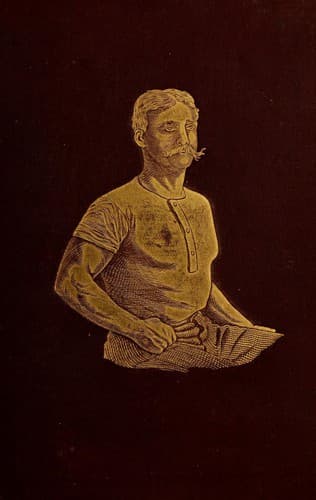
How to Get Strong and How to Stay SoBlaikie, William
Science
How to Get Strong and How to Stay So
Blaikie, William
Physical education and training
"When in active use," says Mitchell, "the thinking organs become full of
blood, and, as Dr. Lombard has shown, rise in temperature, while the
feet and hands become cold. Nature meant that for their work they should
be, in the first place, supplied with food; next, that they should have
certain intervals of rest to rid themselves of the excess of blood
accumulated during their periods of activity; and this is to be done by
sleep, and also by bringing into play the physical machinery of the
body, such as the muscles--that is to say, by exercise which flushes the
parts engaged in it, and so depletes the brain."[H]
Here, then, some physical exercise will rest his brain, and fit it for
more and better work. But this does not necessarily imply so much as is
called for in the hour. Happily, however, there is no lack of instances
where work, quite as vigorous, though not as well directed, has
accompanied mental work of a very high order, and to all appearances
has been a help rather than a hinderance. Instead of one hour a day,
Napoleon for years was in the saddle several hours almost daily, but we
never heard that it clogged his mind. Charles O'Conor, always fond of
long walks, is good at them to-day, and noticeably erect and quick of
movement, though for weeks he once lay at death's door, and though he
was born in 1804. James Russell Lowell, sturdy, broad, and ruddy, is
said to never ride when he can walk, and he is nearly sixty.
Gladstone's reputation as an axeman among the Hawarden oaks has reached
our shores. Indeed, it is doubtful if there are many better _fellers_
of his age in Europe, and he was born in 1809. Mr. M.H. Beebee, the
present senior tutor at Cambridge University in England, who rowed at
number two in the "'Varsity" eight against Oxford in '65, not only
took the very highest university honor--a double-first--but a
much higher double-first than even Gladstone had taken years before.
The fencing, duelling, and hard riding of Bismarck's youth do not
seem to have perceptibly dimmed his intellect, or to have unfitted
it for enormous and very important work in later life.
And while the in-door work equalizes the strength, and takes care of the
arms and chest, the hour's "constitutional" daily out-of-doors has an
especial advantage, in that it insures at least that much out-of-door
life and air. Dr. Mitchell says, "When exposure to out-of-door air is
associated with a fair share of physical exertion, it is an immense
safeguard against the ills of anxiety and too much brain-work. I presume
that very few of our generals could have gone through with their
terrible task if it had not been that they lived in the open air and
exercised freely. For these reasons I do not doubt that the effects
of our great contest were far more severely felt by the Secretary of
War and the late President than by Grant or Sherman."
Public-domain text, read in full here on John Shaqi.
Reviews
Reviews
No reviews yet
Be the first to share your thoughts on this work.
Join the Discussion
Join the discussion
Sign in to leave a comment or review.
Sign InorCreate an account