The call and response of an authentic dialogue between a nurse and
patient has great power--the power to change the lived experiences of
both patient and nurse, to change the situation, to change the world. It
is the same authenticity we search for in relationships with our friends
and lovers. The person who really listens to what we are saying, who
really tries to understand our lived experiences of the world and who
asks the same from us. When found, it brings the same exhilarating
feeling of self-affirmation and the comforting feeling of well-being.
For, if as holistic beings we are the implicate order explicating
itself, as suggested by Bohm[4] and Newman[5] among others, then the
responsibilities of those who would help (e.g., nurses) include making
sense out of the chaos that can occur as illness disrupts past order and
as the ever-present threat of non-being disrupts all order. When we are
successful in helping patients and their loved ones make sense of their
lives by bringing meaning to them, we make sense of and bring meaning to
our own.
And when we help create meaning, it is easier to remember why we chose
nursing and why we continue to choose it despite what an underpaid and
undervalued job it has become in today's marketplace. These are the
moments when by a look or a word or a touch, the patient lets us know
that he understands what is happening to him, what his choices are, and
what he is going to do; that he knows we know; and that each knows that
the other knows. When we get past our science and theories, our
technical prowess, our titles and positions of influence, it is this
shared moment of authenticity--between patient and nurse--that makes us
smile and allows us to move forward in our own life projects.
Nurse educators who seek such authentic exchanges with their students
enjoy similar moments. The same can be said of deans of schools of
nursing, administrators of delivery systems, executives and staff of
nursing and professional organizations, and colleagues on a research
project. It is the authentic dialogue between people that makes any
activity worthwhile regardless of whether or not it is called successful
by others.
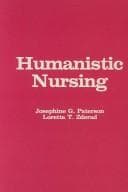
When Josephine G. Paterson and Loretta T. Zderad first published their
book _Humanistic Nursing_ in 1976, society was in the midst of the new
women's movement and nurses were going through the phase of
assertiveness training, dressing for success, and learning to play the
games that mother never taught us. Since then, nurses have moved into
many sectors of society and have held power as we have never held it
before. We have proved ourselves as politicians, administrators,
researchers, and writers. We have refined our abilities to assess,
diagnose, treat, and evaluate. We've raised money and balanced budgets.
We've networked, organized, and formed coalitions.
Public-domain text, read in full here on John Shaqi.
Reviews
Reviews
No reviews yet
Be the first to share your thoughts on this work.
Join the Discussion
Join the discussion
Sign in to leave a comment or review.
Sign InorCreate an account