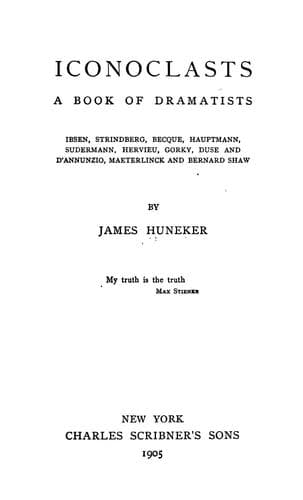
Iconoclasts: A Book of Dramatists: Ibsen, Strindberg, Becque, Hauptmann, Sudermann, Hervieu, Gorky, Duse and D'Annunzio, Maeterlinck and Bernard ShawHuneker, James
History
Iconoclasts: A Book of Dramatists: Ibsen, Strindberg, Becque, Hauptmann, Sudermann, Hervieu, Gorky, Duse and D'Annunzio, Maeterlinck and Bernard Shaw
Huneker, James
Dramatists; European drama -- 19th century -- History and criticism; European drama -- 20th century -- History and criticism
How to weave a play from such unpromising material must have puzzled
Gorky. Evidently he did not try, preferring the easier way of letting
his people tell their own stories and reducing technical construction
to a mere dropping of the curtain from time to time. In fact, there is
far more dramatic intrigue in Tolstoy's Powers of Darkness, of which
this piece is really a pendant. Gorky does not fear the naked truth as
do many literary artists who have social position and reputations to
maintain.
The collision of character which is essential to the production of
drama is brought about somehow or other, the chief means employed
being Luka the pilgrim. This old man, who is as loquacious as Polonius
and almost as platitudinous, changes the ideas of every one he meets.
He finds the thief hard and impenitent; he points out to him that in
Siberia, over yonder, is a wide, free land, where every man may hew a
way for himself. The good-looking scamp tells him that thief he was
born, thief he must remain; that his father saw the inside of prisons;
that if he goes to Siberia it will be as a convict, and not of his
own volition. Yet the words of the stranger have sunk a shaft into
his consciousness, and despite his mockery of the old man's belief he
pauses and reflects--why not? Why not become a decent man, marry, beget
children, and chuck the old life of crime and police espionage? He
loves Natascha. He hates her sister, and in the best scene of the play
he lays his case clumsily but manfully before the girl. The crossroads
of his life are arrived at--her decision will settle which turn he is
to take.
Public-domain text, read in full here on John Shaqi.
Reviews
Reviews
No reviews yet
Be the first to share your thoughts on this work.
Elsewhere in the archive
Join the Discussion
Join the discussion
Sign in to leave a comment or review.
Sign InorCreate an account