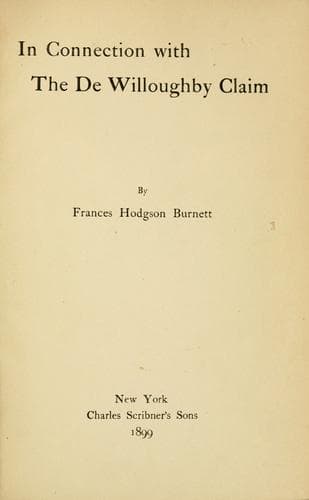
In Connection with the De Willoughby ClaimBurnett, Frances Hodgson
General
In Connection with the De Willoughby Claim
Burnett, Frances Hodgson
United States -- Social life and customs -- 19th century -- Fiction
The applause at this juncture was so great as to oblige him to pause for
a few moments; but it was to be regretted that nine out of ten of the
mountaineers remained entirely unresponsive, crossing their jean-covered
legs and rubbing their lean and grizzled jaws in a soulless manner. They
displayed this apathetic indifference to the most graceful flight of
rhetoric, to the most musical appeals to the hearts of all men loving
freedom, to the announcement that matters had reached a sad and
significant crisis, that the peculiar institutions left as a legacy by
their forefathers were threatened by the Northern fanatics, and that in
the near future the blood of patriots might be poured forth as a libation
upon the soil they loved; to eloquent denunciations of the hirelings and
would-be violators of our rights under the constitution. To all these
they listened, evidently devoting all their slow energies to the
comprehension of it, but they were less moved than might have been
expected of men little used to oratory.
But it was the termination of the speech that stirred all hearts. With a
dexterity only to be compared to its easy grace, the orator left the
sterner side of the question for a tenderer one to which he had already
referred in passing, and which was the side of all political questions
which presented themselves to such men as he. Every man, it was to be
hoped, knew the meaning of home and love and tenderness in some form,
however poor and humble and unpatriotic; to every man was given a man's
privilege of defending the rights and sacredness of this home, this love,
with his strength, with his might, with the blood of his beating heart if
need be. To a Southern man, as to all men, his right to be first in his
own land in ruling, in choosing rulers, in carrying out the laws, meant
his right to defend this home and that which was precious to him within
it. There were a few before him upon this summer's day, alas, alas! that
Fate should will it so, who had not somewhere a grave whose grass moved
in the softness of the wind over dead loves and hopes cherished even in
this hour as naught else was cherished. "And these graves----"
He faltered and paused, glancing towards the doorway with a singular
expression. For a few seconds he could not go on. He was obliged to raise
to his lips the glass of water which had been provided for him.
"Oh!" was sighed softly through the room, "his emotion has overpowered
him. Poor fellow! how sad he looks."
Public-domain text, read in full here on John Shaqi.
Reviews
Reviews
No reviews yet
Be the first to share your thoughts on this work.
Join the Discussion
Join the discussion
Sign in to leave a comment or review.
Sign InorCreate an account