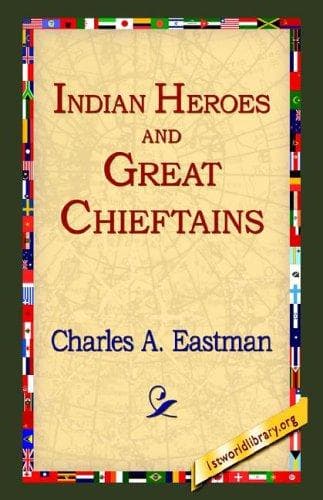
Indian Heroes and Great ChieftainsEastman, Charles A.
History
Indian Heroes and Great Chieftains
Eastman, Charles A.
Dakota Indians -- Biography; Heroes; Indians of North America -- Biography
“About this time we young warriors began to watch the trails of the
white men into the Black Hills, and when we saw a wagon coming we would
hide at the crossing and kill them all without much trouble. We did
this to discourage the whites from coming into our country without our
permission. It was the duty of our Great Father at Washington, by the
agreement of 1868, to keep his white children away.
“During the troublesome time after this treaty, which no one seemed to
respect, either white or Indian [but the whites broke it first], I was
like many other young men--much on the warpath, but with little honor.
I had not yet become noted for any great deed. Finally, Wapaypay and I
waylaid and killed a white soldier on his way from the fort to his home
in the east.
“There were a few Indians who were liars, and never on the warpath,
playing ‘good Indian’ with the Indian agents and the war chiefs at the
forts. Some of this faithless set betrayed me, and told more than I
ever did. I was seized and taken to the fort near Bismarck, North Dakota
[Fort Abraham Lincoln], by a brother [Tom Custer] of the Long-Haired War
Chief, and imprisoned there. These same lying Indians, who were selling
their services as scouts to the white man, told me that I was to be shot
to death, or else hanged upon a tree. I answered that I was not afraid
to die.
“However, there was an old soldier who used to bring my food and stand
guard over me--he was a white man, it is true, but he had an Indian
heart! He came to me one day and unfastened the iron chain and ball with
which they had locked my leg, saying by signs and what little Sioux he
could muster:
“‘Go, friend! take the chain and ball with you. I shall shoot, but the
voice of the gun will lie.’
“When he had made me understand, you may guess that I ran my best! I was
almost over the bank when he fired his piece at me several times, but
I had already gained cover and was safe. I have never told this before,
and would not, lest it should do him an injury, but he was an old man
then, and I am sure he must be dead long since. That old soldier
taught me that some of the white people have hearts,” he added, quite
seriously.
“I went back to Standing Rock in the night, and I had to hide for
several days in the woods, where food was brought to me by my relatives.
The Indian police were ordered to retake me, and they pretended to hunt
for me, but really they did not, for if they had found me I would have
died with one or two of them, and they knew it! In a few days I departed
with several others, and we rejoined the hostile camp on the Powder
River and made some trouble for the men who were building the great iron
track north of us [Northern Pacific].
Public-domain text, read in full here on John Shaqi.
Reviews
Reviews
No reviews yet
Be the first to share your thoughts on this work.
Join the Discussion
Join the discussion
Sign in to leave a comment or review.
Sign InorCreate an account