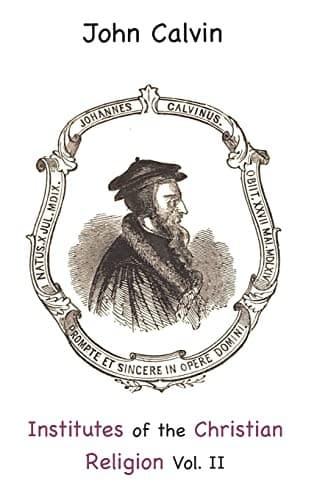
Institutes of the Christian Religion (Vol. 1 of 2)Calvin, Jean
ReligionChristian
Institutes of the Christian Religion (Vol. 1 of 2)
Calvin, Jean
Reformed Church -- Doctrines -- Early works to 1800; Theology, Doctrinal -- Early works to 1800
Their requiring miracles of us is altogether unreasonable; for we forge no
new Gospel, but retain the very same whose truth was confirmed by all the
miracles ever wrought by Christ and the apostles. But they have this
peculiar advantage above us, that they can confirm their faith by
continual miracles even to this day. But the truth is, they allege
miracles which are calculated to unsettle a mind otherwise well
established, they are so frivolous and ridiculous, or vain and false. Nor,
if they were ever so preternatural, ought they to have any weight in
opposition to the truth of God, since the name of God ought to be
sanctified in all places and at all times, whether by miraculous events,
or by the common order of nature. This fallacy might perhaps be more
specious, if the Scripture did not apprize us of the legitimate end and
use of miracles. For Mark informs us, that the miracles which followed the
preaching of the apostles were wrought in confirmation(11) of it, and Luke
tells us, that(12) “the Lord gave testimony to the word of his grace,”
when “signs and wonders” were “done by the hands” of the apostles. Very
similar to which is the assertion of the apostle, that “salvation was
confirmed” by the preaching of the Gospel, “God also bearing witness with
signs, and wonders, and divers miracles.”(13) But those things which we
are told were seals of the Gospel, shall we pervert to undermine the faith
of the Gospel? Those things which were designed to be testimonials of the
truth, shall we accommodate to the confirmation of falsehood? It is right,
therefore, that the doctrine, which, according to the evangelist, claims
the first attention, be examined and tried in the first place; and if it
be approved, then it ought to derive confirmation from miracles. But it is
the characteristic of sound doctrine, given by Christ, that it tends to
promote, not the glory of men, but the glory of God.(14) Christ having
laid down this proof of a doctrine, it is wrong to esteem those as
miracles which are directed to any other end than the glorification of the
name of God alone. And we should remember that Satan has his wonders,
which, though they are juggling tricks rather than real miracles, are such
as to delude the ignorant and inexperienced. Magicians and enchanters have
always been famous for miracles; idolatry has been supported by
astonishing miracles; and yet we admit them not as proofs of the
superstition of magicians or idolaters. With this engine also the
simplicity of the vulgar was anciently assailed by the Donatists, who
abounded in miracles. We therefore give the same answer now to our
adversaries as Augustine(15) gave to the Donatists, that our Lord hath
cautioned us against these miracle‐mongers by his prediction, that there
should arise false prophets, who, by various signs and lying wonders,
“should deceive (if possible) the very elect.”(16) And Paul has told us,
that the kingdom of Antichrist would be “with all power, and signs, and
Public-domain text, read in full here on John Shaqi.
Reviews
Reviews
No reviews yet
Be the first to share your thoughts on this work.
Join the Discussion
Join the discussion
Sign in to leave a comment or review.
Sign InorCreate an account