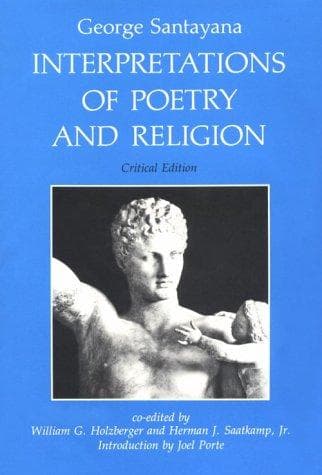
Interpretations of Poetry and ReligionSantayana, George
Religion
Interpretations of Poetry and Religion
Santayana, George
Aesthetics; Literature -- History and criticism; Poetry; Religion
One of the elements of that higher tradition which Browning was not
prepared to imbibe was the idealization of love. The passion he
represents is lava hot from the crater, in no way moulded, smelted,
or refined. He had no thought of subjugating impulses into the
harmony of reason. He did not master life, but was mastered by it.
Accordingly the love he describes has no wings; it issues in nothing.
His lovers "extinguish sight and speech, each on each"; sense, as
he says elsewhere, drowning soul. The man in the gondola may well
boast that he can die; it is the only thing he can properly do.
Death is the only solution of a love that is tied to its individual
object and inseparable from the alloy of passion and illusion within
itself. Browning's hero, because he has loved intensely, says that
he has lived; he would be right, if the significance of life were
to be measured by the intensity of the feeling it contained, and if
intelligence were not the highest form of vitality. But had that hero
known how to love better and had he had enough spirit to dominate his
love, he might perhaps have been able to carry away the better part of
it and to say that he could not die; for one half of himself and of his
love would have been dead already and the other half would have been
eternal, having fed--
"On death, that feeds on men;
And death once dead, there's no more dying then."
The irrationality of the passions which Browning glorifies, making them
the crown of life, is so gross that at times he cannot help perceiving
it.
"How perplexed
Grows belief! Well, this cold clay clod
Was man's heart:
Crumble it, and what comes next? Is it God?"
Yes, he will tell us. These passions and follies, however desperate in
themselves and however vain for the individual, are excellent as parts
of the dispensation of Providence:--
"Be hate that fruit or love that fruit,
It forwards the general deed of man,
And each of the many helps to recruit
The life of the race by a general plan,
Each living his own to boot."
Public-domain text, read in full here on John Shaqi.
Reviews
Reviews
No reviews yet
Be the first to share your thoughts on this work.
Elsewhere in the archive
Join the Discussion
Join the discussion
Sign in to leave a comment or review.
Sign InorCreate an account