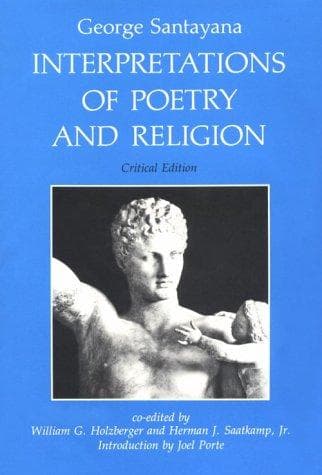
Interpretations of Poetry and Religion — John Shaqi
Interpretations of Poetry and ReligionSantayana, George
Religion
Interpretations of Poetry and Religion
Santayana, George
Aesthetics; Literature -- History and criticism; Poetry; Religion
All his invention was guided by the genius of the
deity, as represented by the traditions of his shrine. This poetry,
then, even in its most playful mood, is not mere poetry, but religion.
It is a poetry in which men believe; it is a poetry that beautifies and
justifies to their minds the positive facts of their ancestral worship,
their social unity, and their personal conscience.
These general reflections may help us to approach the hymns of Homer
in a becoming spirit. For in them we find the extreme of fancy, the
approach to a divorce between the imagination and the faith of the
worshipper. Consequently there is danger that we may allow ourselves
to read these lives of the gods as the composition of a profane poet.
If we did so we should fail to understand not only their spirit as
a whole but many of their parts, in which notes are struck now of
devotion and affectionate pride, now of gratitude and entreaty. These
may be addressed, it is true, to a being that has just been described
as guilty of some signal vice or treachery, and the contradiction may
well stagger a Puritan critic. But the lusts of life were once for
all in the blood of the Pagan gods, who were the articulate voices of
Nature and of passion. The half-meant exaggeration of a well-known
trait in the divinity would not render the poets that indulged in it
unwelcome to the god; he could feel the sure faith and affection of
his worshippers even in their good-humoured laughter at his imaginary
plights and naughtiness. The clown was not excluded from these rites.
His wit also counted as a service.
The Homeric Hymns, if we may trust the impression they produce on
a modern, are not hymns and are not Homer's. They are fragments of
narrative in Ionic hexameter recited during the feasts and fairs at
various Greek shrines. They are not melodies to be chanted with a
common voice by the assemblage during a sacrifice; they are tales
delivered by the minstrel to the listening audience of citizens and
strangers. They usually have a local reference. Thus we find under the
title of a hymn to Apollo a song of Delos and one of Delphi. Delos is
a barren rock; its wealth was due to the temple that attracted to the
place pilgrimages and embassies, not without rich offerings, from many
Greek cities. Accordingly we hear how Leto or Latona, when about to
become the mother of Apollo, wandered about the cities and mountains
of Greece and Asia, seeking a birthplace for her son. None would
receive her, but all the islands trembled at the awful honour of such a
nativity, profitable as the honour might eventually prove,--
Public-domain text, read in full here on John Shaqi.
Reviews
Reviews
No reviews yet
Be the first to share your thoughts on this work.
Join the Discussion
Join the discussion
Sign in to leave a comment or review.
Sign InorCreate an account