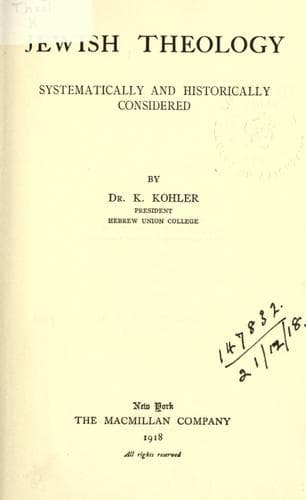
Jewish Theology, Systematically and Historically ConsideredKohler, Kaufmann
Religion
Jewish Theology, Systematically and Historically Considered
Kohler, Kaufmann
Judaism -- Doctrines
promise of divine mercy and also of final resurrection.(676) Instead of
transmitting the heritage of sin to coming generations, the first man is
for them an example of repentance. So do the Haggadists tell us quite
characteristically that God merely wanted to test the first man by an
insignificant command, so that the first representative of the human race
should show whether he was worthy to enter eternal life in his mortal
garb, as did Enoch and Elijah. As he could not stand the test, he
forfeited the marks of divine rank, his celestial radiance, his gigantic
size, and his power to overcome death.(677) Obviously the Biblical story
was embellished with material from the Persian legend of the fall of Yima
or Djemshid, the first man, from superhuman greatness because of his
sin,(678) but it was always related frankly as a legend, and could never
influence the Jewish conception of the fall of man.
7. Judaism rejects completely the belief in hereditary sin and the
corruption of the flesh. The Biblical verse, “God made man upright; but
they have sought out many inventions,”(679) is explained in the Midrash:
“Upright and just as is God, He made man after His likeness in order that
he might strive after righteousness, and unfold ever more his god-like
nature, but men in their dissensions have marred the divine image.”(680)
With reference to another verse in Ecclesiastes:(681) “The dust returneth
unto the earth as it was, and the spirit returneth unto God who gave it,”
the rabbis teach “Pure as the soul is when entering upon its earthly
career, so can man return it to his Maker.”(682) Therefore the pious Jew
begins his daily prayers with the words: “My God, the soul which Thou hast
given me is pure.”(683) The life-long battle with sin begins only at the
age when sensual desire, “the evil inclination,” awakens in youth; then
the state of primitive innocence makes way for the sterner contest for
manly virtue and strength of character.
Public-domain text, read in full here on John Shaqi.
Reviews
Reviews
No reviews yet
Be the first to share your thoughts on this work.
Elsewhere in the archive
Join the Discussion
Join the discussion
Sign in to leave a comment or review.
Sign InorCreate an account