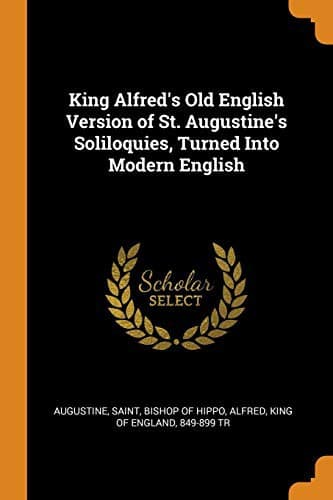
King Alfred's Old English Version of St. Augustine's Soliloquies: Turned into Modern EnglishAugustine, of Hippo, Saint
ReligionChristian
King Alfred's Old English Version of St. Augustine's Soliloquies: Turned into Modern English
Augustine, of Hippo, Saint
Knowledge, Theory of (Religion) -- Early works to 1800
_R._ Thou art right. But I would know whether thy old _covetousness and
greediness be entirely extirpated and uprooted from thy mind, so that it
can not still grow_.
_A._ _Why askest thou that?_
_R._ I speak of the things which thou before saidst to me that thou
hadst decided to leave off and for nothing would turn back to again,
namely: overmuch wealth, and _immoderate honor, and inordinately rich
and luxurious living_; and therefore I now ask whether, either for the
love of them or for the love of any thing, thou wilt return to them
again. I heard formerly that thou saidst that thou lovedst thy friends,
next to God and thine own reason, above other things. Now I would know
whether thou, for their love, wouldst lay hold of these things again.
_A._ I will lay hold of all again for their love, if I can not else have
their companionship--_yet it doth not please me so to do_.
_R._ Very reasonably thou dost answer me and very rightly. _Howbeit I
understand that the lusts of the world are not entirely uprooted from
thy mind, although the trench be prepared; for the roots can sprout
thence again._ Yet I impute that not to thee as a fault, for thou layest
hold of it not for the love of those things but for the love of this
thing which it is more right to love than that. _I never ask about any
man, what he doth; but yet I ask thee now why thou lovest thy friends so
much, or what thou lovest in them, or whether thou lovest them for their
own sake or for some other thing._
[Sidenote: 39.14--41.19]
_A._ I love them for friendship and for companionship, _and above all
others I love those who most help me to understand and to know reason
and wisdom, most of all about God and about our souls; for I know that I
can more easily seek after Him with their help than I can without_.
_R._ How then if they do not wish to inquire _after the One whom thou
seekest_?
_A._ I shall teach them so that they will.
_R._ But how then if thou canst not, and if they be so foolish as to
love other things more than that which thou lovest, and say that they
can not or will not?
_A._ _I, nevertheless, will have them_: they will be helpful to me in
some things and I likewise to them.
_R._ But how then if they disturb thee, _and if the infirmities of the
body hinder thee_?
Public-domain text, read in full here on John Shaqi.
Reviews
Reviews
No reviews yet
Be the first to share your thoughts on this work.
Join the Discussion
Join the discussion
Sign in to leave a comment or review.
Sign InorCreate an account