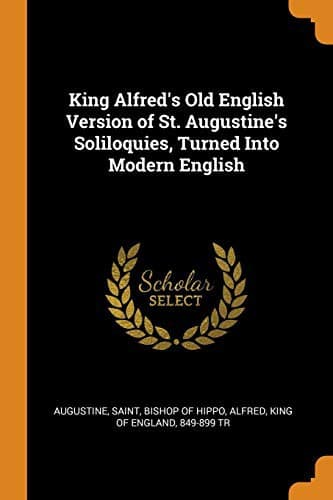
King Alfred's Old English Version of St. Augustine's Soliloquies: Turned into Modern EnglishAugustine, of Hippo, Saint
ReligionChristian
King Alfred's Old English Version of St. Augustine's Soliloquies: Turned into Modern English
Augustine, of Hippo, Saint
Knowledge, Theory of (Religion) -- Early works to 1800
_R._ I know not anything to command thee of which thou hast more need
for the science which thou wishest to know, than that thou despise, so
much as thou art able, worldly honors, _and especially intemperate and
unlawful ones_, because I fear that they may bind thy mind to themselves
and take it with their snare, just as one catcheth wild beasts or
fowls, so that thou canst not accomplish what thou wishest; for I know
that the freer thou art from the things of this world, the more clearly
thou shalt understand about the wisdom which thou desirest; and if it
ever happen that thou canst so entirely forsake them that thou desirest
naught of them, then shall I be able to say to thee forsooth (believe me
if thou wilt), that in that very hour thou shalt know all that thou
wishest now to know, and shalt have all that thou wishest to have.
[Sidenote: 46.10--48.6]
_A._ When shall that be? I do not believe that it will ever be that I
shall not yearn at all after this world's honors, unless one thing
happen, namely: that I see _those honors which thou promisest me.
Howbeit I know not that it would please me so well to yearn no more
after this world's honors._
_R._ Now methinks thou dost not answer me with reason. Methinks that
thou speakest very much as if thine eyes should say to thy mind: 'We
will never avoid the darkness of the night until we can see the sun
itself.' Thus, methinks, the eyes do, if they avoid that part of the
sun's light which they can see. It can not happen even to the soundest
of all eyes that they can look from this world and see the sun as it is.
By this thou mayest conclude that thou oughtest not to sigh though thou
canst not see wisdom naked with the eyes of thy mind just as it is; for
thou canst never do that _while thou art in the darkness of thy sins.
But enjoy the wisdom which thou hast, and have joy in the part which
thou canst understand, and seek more with thy whole heart. Wisdom itself
knoweth what thou art worthy of, and how much it may show itself to
thee. There is naught worse in a man than to suppose that he is worthy
of what he is not. The physician knoweth better than the sick whether he
can be healed or not, or whether he can be healed by mild or by severe
treatment. Therefore thou must not excuse thyself too much, nor sigh too
much after aught. The eyes of thy mind are not so wholly sound as thou
dost suppose._
[Sidenote: 48.7--49.18]
Public-domain text, read in full here on John Shaqi.
Reviews
Reviews
No reviews yet
Be the first to share your thoughts on this work.
Join the Discussion
Join the discussion
Sign in to leave a comment or review.
Sign InorCreate an account