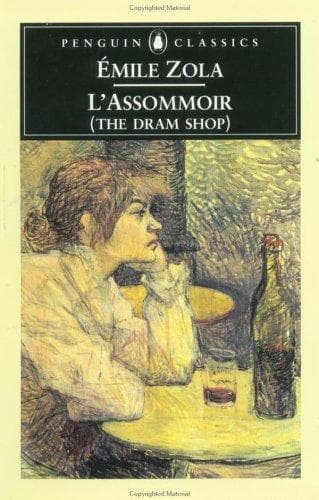
Domestic fiction; Married women -- Fiction; Paris (France) -- Fiction; Working class women -- Fiction
Virginie now frequently spoke to Gervaise of Lantier. She seemed to
find amusement in filling her mind with ideas of her old lover just for
the pleasure of embarrassing her by making suggestions. One day she
related that she had met him; then, as the laundress took no notice,
she said nothing further, and it was only on the morrow that she added
he had spoken about her for a long time, and with a great show of
affection. Gervaise was much upset by these reports whispered in her
ear in a corner of the shop. The mention of Lantier’s name always
caused a worried sensation in the pit of her stomach. She certainly
thought herself strong; she wished to lead the life of an industrious
woman, because labor is the half of happiness. So she never considered
Coupeau in this matter, having nothing to reproach herself with as
regarded her husband, not even in her thoughts. But with a hesitating
and suffering heart, she would think of the blacksmith. It seemed to
her that the memory of Lantier—that slow possession which she was
resuming—rendered her unfaithful to Goujet, to their unavowed love,
sweet as friendship. She passed sad days whenever she felt herself
guilty towards her good friend. She would have liked to have had no
affection for anyone but him outside of her family. It was a feeling
far above all carnal thoughts, for the signs of which upon her burning
face Virginie was ever on the watch.
As soon as spring came Gervaise often went and sought refuge with
Goujet. She could no longer sit musing on a chair without immediately
thinking of her first lover; she pictured him leaving Adele, packing
his clothes in the bottom of their old trunk, and returning to her in a
cab. The days when she went out, she was seized with the most foolish
fears in the street; she was ever thinking she heard Lantier’s
footsteps behind her. She did not dare turn round, but tremblingly
fancied she felt his hands seizing her round the waist. He was, no
doubt, spying upon her; he would appear before her some afternoon; and
the bare idea threw her into a cold perspiration, because he would to a
certainty kiss her on the ear, as he used to do in former days solely
to tease her. It was this kiss which frightened her; it rendered her
deaf beforehand; it filled her with a buzzing amidst which she could
only distinguish the sound of her heart beating violently. So, as soon
as these fears seized upon her, the forge was her only shelter; there,
under Goujet’s protection, she once more became easy and smiling, as
his sonorous hammer drove away her disagreeable reflections.
Public-domain text, read in full here on John Shaqi.
Reviews
Reviews
No reviews yet
Be the first to share your thoughts on this work.
Elsewhere in the archive
Join the Discussion
Join the discussion
Sign in to leave a comment or review.
Sign InorCreate an account