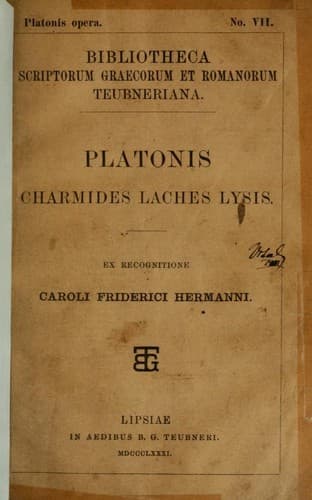
Classical literature; Courage -- Early works to 1800; Socrates, 470 BC-399 BC
SOCRATES: Then tell me, Nicias, or rather tell us, for Laches and I
are partners in the argument: Do you mean to affirm that courage is the
knowledge of the grounds of hope and fear?
NICIAS: I do.
SOCRATES: And not every man has this knowledge; the physician and the
soothsayer have it not; and they will not be courageous unless they
acquire it--that is what you were saying?
NICIAS: I was.
SOCRATES: Then this is certainly not a thing which every pig would know,
as the proverb says, and therefore he could not be courageous.
NICIAS: I think not.
SOCRATES: Clearly not, Nicias; not even such a big pig as the
Crommyonian sow would be called by you courageous. And this I say not as
a joke, but because I think that he who assents to your doctrine, that
courage is the knowledge of the grounds of fear and hope, cannot allow
that any wild beast is courageous, unless he admits that a lion, or a
leopard, or perhaps a boar, or any other animal, has such a degree of
wisdom that he knows things which but a few human beings ever know
by reason of their difficulty. He who takes your view of courage must
affirm that a lion, and a stag, and a bull, and a monkey, have equally
little pretensions to courage.
LACHES: Capital, Socrates; by the gods, that is truly good. And I hope,
Nicias, that you will tell us whether these animals, which we all admit
to be courageous, are really wiser than mankind; or whether you will
have the boldness, in the face of universal opinion, to deny their
courage.
NICIAS: Why, Laches, I do not call animals or any other things which
have no fear of dangers, because they are ignorant of them, courageous,
but only fearless and senseless. Do you imagine that I should call
little children courageous, which fear no dangers because they know
none? There is a difference, to my way of thinking, between fearlessness
and courage. I am of opinion that thoughtful courage is a quality
possessed by very few, but that rashness and boldness, and fearlessness,
which has no forethought, are very common qualities possessed by many
men, many women, many children, many animals. And you, and men in
general, call by the term 'courageous' actions which I call rash;--my
courageous actions are wise actions.
LACHES: Behold, Socrates, how admirably, as he thinks, he dresses
himself out in words, while seeking to deprive of the honour of courage
those whom all the world acknowledges to be courageous.
NICIAS: Not so, Laches, but do not be alarmed; for I am quite willing to
say of you and also of Lamachus, and of many other Athenians, that you
are courageous and therefore wise.
LACHES: I could answer that; but I would not have you cast in my teeth
that I am a haughty Aexonian.
Public-domain text, read in full here on John Shaqi.
Reviews
Reviews
No reviews yet
Be the first to share your thoughts on this work.
Join the Discussion
Join the discussion
Sign in to leave a comment or review.
Sign InorCreate an account