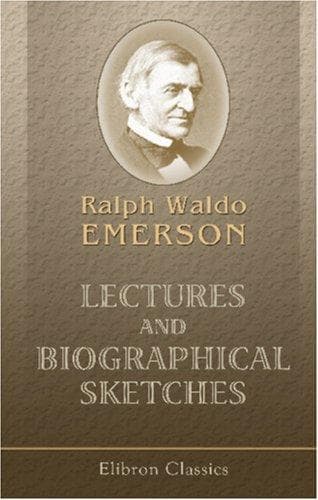
Lectures and biographical sketchesEmerson, Ralph Waldo
Philosophy
Lectures and biographical sketches
Emerson, Ralph Waldo
American essays -- 19th century; Speeches, addresses, etc., American -- 19th century
Can he answer these questions? can he dispose of them? Happy if you can
answer them mutely in the order and disposition of your life! Happy
for more than yourself, a benefactor of men, if you can answer them in
works of wisdom, art, or poetry; bestowing on the general mind of men
organic creations, to be the guidance and delight of all who know them.
These questions speak to Genius, to that power which is underneath and
greater than all talent, and which proceeds out of the constitution
of every man: to Genius, which is an emanation of that it tells of;
whose private counsels are not tinged with selfishness, but are laws.
Men of talent fill the eye with their pretension. They go out into
some camp of their own, and noisily persuade society that this thing
which they do is the needful cause of all men. They have talents for
contention, and they nourish a small difference into a loud quarrel.
But the world is wide, nobody will go there after to-morrow. The gun
they have pointed can defend nothing but itself, nor itself any longer
than the man is by. What is the use of artificial positions? But Genius
has no taste for weaving sand, or for any trifling, but flings itself
on real elemental things, which are powers, self-defensive; which first
subsist, and then resist unweariably forevermore all that opposes.
Genius has truth and clings to it, so that what it says and does is
not in a by-road, visited only by curiosity, but on the great highways
of nature, which were before the Appian Way, and which all souls must
travel. Genius delights only in statements which are themselves true,
which attack and wound any who opposes them, whether he who brought
them here remains here or not;--which are live men, and do daily
declare fresh war against all falsehood and custom, and will not let an
offender go; which society cannot dispose of or forget, but which abide
there and will not down at anybody’s bidding, but stand frowning and
formidable, and will and must be finally obeyed and done.
Public-domain text, read in full here on John Shaqi.
Reviews
Reviews
No reviews yet
Be the first to share your thoughts on this work.
Elsewhere in the archive
Join the Discussion
Join the discussion
Sign in to leave a comment or review.
Sign InorCreate an account