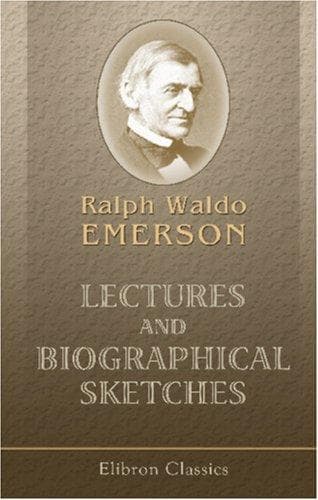
Lectures and biographical sketchesEmerson, Ralph Waldo
Philosophy
Lectures and biographical sketches
Emerson, Ralph Waldo
American essays -- 19th century; Speeches, addresses, etc., American -- 19th century
“This morning rich in existence; the remembrance of past destitution in
the deep poverty of my aunt, and her most unhappy temper; of bitterer
days of youth and age, when my senses and understanding seemed but
means of labor, or to learn my own unpopular destiny, and that--but no
more;--joy, hope and resignation unite me to Him whose mysterious Will
adjusts everything, and the darkest and lightest are alike welcome.
Oh! could this state of mind continue, death would not be longed for.”
“I felt, till above twenty years old, as though Christianity were as
necessary to the world as existence;--was ignorant that it was lately
promulged, or partially received.” Later: “Could I have those hours in
which in fresh youth I said, To obey God is joy, though there were no
hereafter, I should rejoice, though returning to dust.”
“Folly follows me as the shadow does the form. Yet my whole life
devoted to find some new truth which will link me closer to God. And
the simple principle which made me say, in youth and laborious poverty,
that, should He make me a blot on the fair face of his Creation, I
should rejoice in His will, has never been equalled, though it returns
in the long life of destitution like an Angel. I end days of fine
health and cheerfulness without getting upward now. How did I use to
think them lost! If more liberal views of the divine government make me
think nothing lost which carries me to His now hidden presence, there
may be danger of losing and causing others the loss of that awe and
sobriety so indispensable.”
She was addressed and offered marriage by a man of talents, education,
and good social position, whom she respected. The proposal gave her
pause and much to think, but, after consideration she refused it,
I know not on what grounds: but a few allusions to it in her diary
suggest that it was a religious act, and it is easy to see that she
could hardly promise herself sympathy in her religious abandonment with
any but a rarely-found partner.
“1807. Jan. 19, Malden [alluding to the sale of her farm]. Last night
I spoke two sentences about that foolish place, which I most bitterly
lament,--not because they were improper, but they arose from anger. It
is difficult, when we have no kind of barrier, to command our feelings.
But this shall teach me. It humbles me beyond anything I have met, to
find myself for a moment affected with hope, fear, or especially anger,
about interest. But I did overcome and return kindness for the repeated
provocations. What is it? My uncle has been the means of lessening my
property. Ridiculous to wound him for that. He was honestly seeking
his own. But at last, this very night, the bargain is closed, and I
am delighted with myself:--my dear self has done well. Never did I so
exult in a trifle. Happy beginning of my bargain, though the sale of
the place appears to me one of the worst things for me at this time.”
Public-domain text, read in full here on John Shaqi.
Reviews
Reviews
No reviews yet
Be the first to share your thoughts on this work.
Elsewhere in the archive
Join the Discussion
Join the discussion
Sign in to leave a comment or review.
Sign InorCreate an account