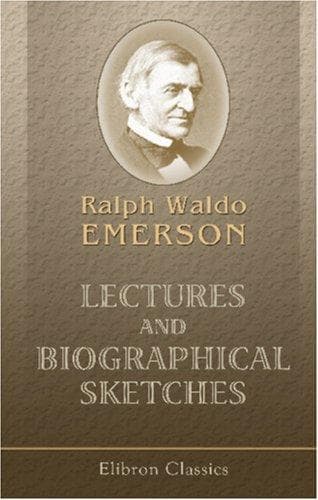
Lectures and biographical sketchesEmerson, Ralph Waldo
Philosophy
Lectures and biographical sketches
Emerson, Ralph Waldo
American essays -- 19th century; Speeches, addresses, etc., American -- 19th century
He was a very natural, but a very high character; a man of simple
tastes, plain and true in speech, with a clear perception of
justice, and a perfect obedience thereto in his action; of a strong
understanding, precise and methodical, which gave him great eminence
in the legal profession. It was rather his reputation for severe
method in his intellect than any special direction in his studies
that caused him to be offered the mathematical chair in Harvard
University, when vacant in 1806. The severity of his logic might have
inspired fear, had it not been restrained by his natural reverence,
which made him modest and courteous, though his courtesy had a grave
and almost military air. He combined a uniform self-respect with a
natural reverence for every other man; so that it was perfectly easy
for him to associate with farmers, and with plain, uneducated, poor
men, and he had a strong, unaffected interest in farms, and crops, and
weathers, and the common incidents of rural life. It was just as easy
for him to meet on the same floor, and with the same plain courtesy,
men of distinction and large ability. He was fond of farms and trees,
fond of birds, and attentive to their manners and habits; addicted to
long and retired walks; temperate to asceticism, for no lesson of his
experience was lost on him, and his self-command was perfect. Though
rich, of a plainness and almost poverty of personal expenditure, yet
liberal of his money to any worthy use, readily lending it to young
men, and industrious men, and by no means eager to reclaim of them
either the interest or the principal. He was open-handed to every
charity, and every public claim that had any show of reason in it. When
I talked with him one day of some inequality of taxes in the town, he
said it was his practice to pay whatever was demanded; for, though he
might think the taxation large and very unequally proportioned, yet he
thought the money might as well go in this way as in any other.
The strength and the beauty of the man lay in the natural goodness and
justice of his mind, which, in manhood and in old age, after dealing
all his life with weighty private and public interests, left an
infantile innocence, of which we have no second or third example,--the
strength of a chief united to the modesty of a child. He returned from
courts or congresses to sit down, with unaltered humility, in the
church or in the town-house, on the plain wooden bench where honor came
and sat down beside him.
Public-domain text, read in full here on John Shaqi.
Reviews
Reviews
No reviews yet
Be the first to share your thoughts on this work.
Elsewhere in the archive
Join the Discussion
Join the discussion
Sign in to leave a comment or review.
Sign InorCreate an account