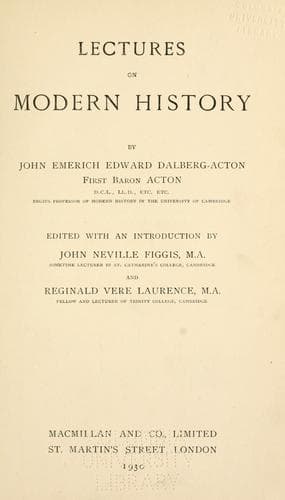
Lectures on Modern historyActon, John Emerich Edward Dalberg Acton, Baron
History
Lectures on Modern history
Acton, John Emerich Edward Dalberg Acton, Baron
History, Modern
It was not stipulated in the Majestatsbrief, as the instrument of 1609
was called, which was the charter of toleration under the Bohemian
crown, that Protestants might build churches on the domains of the
Catholic clergy; but this they claimed to do, inasmuch as the right
was conceded to them on the crown lands, and in Bohemia these were
technically considered to include Church lands. Accordingly, one was
built at Braunau, and was stopped by authority; another at
Klostergrab, and was pulled down. At the same time, the intention to
reverse legislation and repress Protestant religion on both sides of
the tube alike was openly confessed.
The Styrian archduke, the head of the clerical party, became King of
Bohemia and Emperor-elect, the kinsmen who were nearer the succession
withdrawing in his favour. The Habsburgs felt strong enough to carry
forward the Counter-Reformation even in Bohemia and the dependent
lands, where nine-tenths of the people were Protestants, with rights
assured by a recent and solemn instrument. They had in their favour
the letter of the Peace of Religion, by which no prince could be
required to rule over subjects differing from him in religion, and the
more probable reading of the rule as to the building of places of
worship. Against them was the unquestioned text of the
Majestatsbrief, not yet nine years old. The new emperor did not
meditate a breach of faith. Real violence was unavailing where the
opponents were in a large majority. The Counter-Reformation had
produced in Central Europe a scheme of persecution, which stopped
short of tragedy, and laboured to accomplish, by infinite art and
trouble, what the readier methods of the Holy Office and the Penal Law
were expected to do. Ferdinand II was a slow, laborious, friendly
man, with a sense of duty and a certain strictness of private life,
but without initiative or imagination.
Public-domain text, read in full here on John Shaqi.
Reviews
Reviews
No reviews yet
Be the first to share your thoughts on this work.
Elsewhere in the archive
Join the Discussion
Join the discussion
Sign in to leave a comment or review.
Sign InorCreate an account