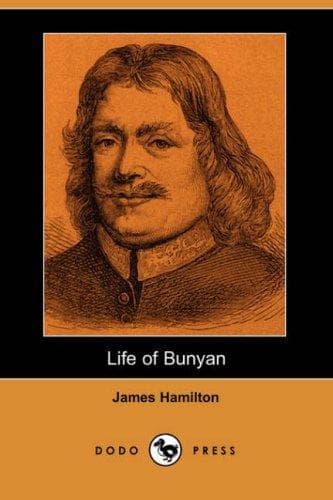
Whether it was the man’s own humanity, or whether it was that God who
assuaged Joseph’s captivity, gave Bunyan special favour in the eyes of
the keeper of his prison, the fact is certain, that he met with singular
indulgence at the least likely hands. Not only was he allowed many a
little indulgence in his cell, but he was suffered to go and come with a
freedom which could hardly have been exceeded had the county gaol been
his own hired house. For months together he was a constant attender of
the church-meetings of his brethren in Bedford, and was actually chosen
pastor during the period of his incarceration. On one occasion some of
the bishops who had heard a rumour of the unusual liberty conceded to
him, sent a messenger from London to Bedford to ascertain the truth. The
officer was instructed to call at the prison during the night. It was a
night when Bunyan had received permission to stay at home with his
family; but so uneasy did he feel, that he told his wife he must go back
to his old quarters. So late was it that the gaoler blamed him for
coming at such an untimely hour; but a little afterwards the messenger
arrived. “Are all the prisoners safe?” “Yes.” “Is John Bunyan safe?”
“Yes.” “Let me see him.” Bunyan was called, and the messenger went his
way; and when he was gone the gaoler told him, “Well, you may go out
again just when you think proper; for you know when to return better than
I can tell you.”
But the best alleviations of his captivity were those wonderful works
which he there projected or composed. Some of these were controversial;
but one of them was his own life, under the title, “Grace abounding to
the Chief of Sinners,” and another was the “PILGRIM’S PROGRESS.”
In 1672 he obtained his liberty, and his friends immediately built for
him a large meeting-house, where he continued to preach with little
interruption till his death. Once a year he visited London, and was
there so popular, that twelve hundred people would gather together at
seven in the morning of a winter’s working-day to hear him. Amongst the
admiring listeners, Dr Owen was frequently found; and once when Charles
the Second asked how a learned man like him could sit down to hear a
tinker prate, the great theologian is said to have answered, “May it
please your Majesty, could I possess the tinker’s abilities for
preaching, I would most gladly relinquish all my learning.” But popular
as he was, he was not fond of praise. One day after he had concluded an
impressive discourse, his friends pressed round to thank him for his
“sweet sermon.” “Aye,” he bluntly answered, “you need not remind me of
that; for the devil told me as much before I left the pulpit.”
Public-domain text, read in full here on John Shaqi.
Reviews
Reviews
No reviews yet
Be the first to share your thoughts on this work.
Join the Discussion
Join the discussion
Sign in to leave a comment or review.
Sign InorCreate an account