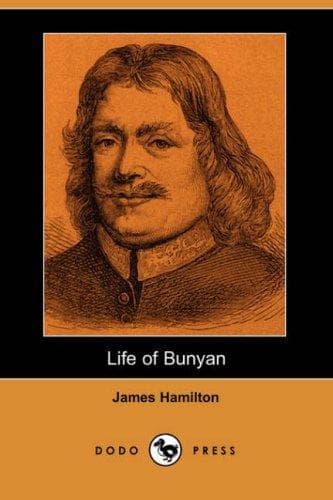
He had numbered sixty years, and written as many books, when he was
released from his abundant labours. A young gentleman, his neighbour,
had fallen under his father’s displeasure, and was much concerned at his
father’s estrangement as well as at the prospect of being disinherited.
He begged Mr Bunyan’s friendly interposition to propitiate his father,
and prepare the way for his return to parental favour and affection. The
kind-hearted man undertook the task, and having successfully achieved it,
was returning from Reading to London on horseback, when he was thoroughly
drenched with excessive rains. He arrived cold and wet at the house of
Mr Strudwick, a grocer on Snow Hill. Here he was seized with fits of
shivering, which passed off in violent fever, and after ten days’
sickness, on the 31st of August 1688, his pilgrimage ended, and he went
in by the gate into the city.
* * * * *
As the most appropriate introduction to the following selections from the
practical writings of Bunyan, we would chose this rapid history of the
MAN, with a few remarks on the THEOLOGIAN and the AUTHOR.
I. Bunyan’s theological merits we rank very high. No one can turn over
his pages without noticing the abundance of his Scriptural quotations;
and these quotations no one can examine without perceiving how minutely
he had studied, and how deeply he had pondered, the word of God. But it
is possible to be very _textual_, and yet by no means very scriptural. A
man may heave an exact acquaintance with the literal Bible, and yet
entirely miss the great Bible message. He may possess a dexterous
command of detached passages and insulated sentences, and yet be entirely
ignorant of that peculiar scheme which forms the great gospel revelation.
But this was Bunyan’s peculiar excellence. He was even better acquainted
with the Gospel as the scheme of God, than he was familiar with the
Bible-text; and the consequence is, that though he is sometimes
irrelevant in his references, and fanciful in interpreting particular
passages, his doctrine is almost always according to the analogy of
faith. The doctrine of a free and instant justification by the imputed
righteousness of Christ, none even of the Puritans could state with more
Luther-like boldness, nor defend with an affection more worthy of Paul.
In his last and best days, Coleridge wrote, “I know of no book, the Bible
excepted, as above all comparison, which I, according to my judgment and
experience, could so safely recommend as teaching and enforcing the whole
saving truth, according to the mind that was in Christ Jesus, as the
Pilgrim’s Progress. It is in my conviction the best _Summa Theologiæ
Evangelicæ_ ever produced by a writer not miraculously inspired.” {30a}
Without questioning this verdict, we would include in the encomium some
of his other writings, which possibly Coleridge never saw. Such as the
Tracts contained in this volume. {30b} They exhibit Gospel-truths in so
Public-domain text, read in full here on John Shaqi.
Reviews
Reviews
No reviews yet
Be the first to share your thoughts on this work.
Join the Discussion
Join the discussion
Sign in to leave a comment or review.
Sign InorCreate an account