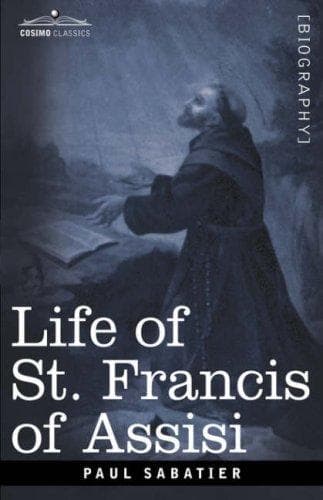
Christian saints -- Biography; Francis, of Assisi, Saint, 1182-1226
In ordinary periods each people has its own interests, its tendencies,
its tears, and its joys; but let a time of crisis come, and the true
unity of the human family will suddenly make itself felt with a strength
never before suspected. Each body of water has its own currents, but
when the hurricane is abroad they mysteriously intermingle, and from the
ocean to the remotest mountain lake the same tremor will upheave them
all.
It was thus in '89, it was thus also in the thirteenth century.
Never was there less of frontier, never, either before or since, such a
mingling of nationalities; and at the present day, with all our highways
and railroads, the people live more apart.[1]
The great movement of thought of the thirteenth century is above all a
religious movement, presenting a double character--it is popular and it
is laic. It comes out from the heart of the people, and it looks athwart
many uncertainties at nothing less than wresting the sacred things from
the hands of the clergy.
The conservatives of our time who turn to the thirteenth century as to
the golden age of authoritative faith make a strange mistake. If it is
especially the century of saints, it is also that of heretics. We shall
soon see that the two words are not so contradictory as might appear; it
is enough for the moment to point out that the Church had never been
more powerful nor more threatened.
There was a genuine attempt at a religious revolution, which, if it had
succeeded, would have ended in a universal priesthood, in the
proclamation of the rights of the individual conscience.
The effort failed, and though later on the Revolution made us all kings,
neither the thirteenth century nor the Reformation was able to make us
all priests. Herein, no doubt, lies the essential contradiction of our
lives and that which periodically puts our national institutions in
peril. Politically emancipated, we are not morally or religiously
free.[2]
The thirteenth century with juvenile ardor undertook this revolution,
which has not yet reached its end. In the north of Europe it became
incarnate in cathedrals, in the south, in saints.
The cathedrals were the lay churches of the thirteenth century. Built by
the people for the people, they were originally the true common house of
our old cities. Museums, granaries, chambers of commerce, halls of
justice, depositories of archives, and even labor exchanges, they were
all these at once.
Public-domain text, read in full here on John Shaqi.
Reviews
Reviews
No reviews yet
Be the first to share your thoughts on this work.
Join the Discussion
Join the discussion
Sign in to leave a comment or review.
Sign InorCreate an account