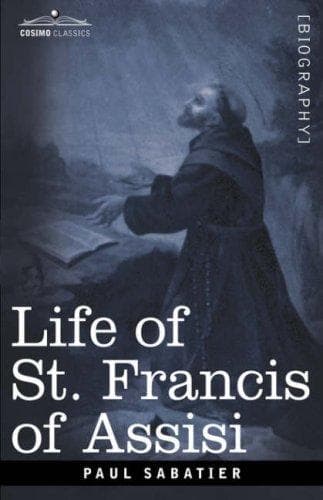
Christian saints -- Biography; Francis, of Assisi, Saint, 1182-1226
That art of the Middle Ages which Victor Hugo and Viollet-le-Duc have
taught us to understand and love was the visible expression of the
enthusiasm of a people who were achieving communal liberty. Very far
from being the gift of the Church, it was in its beginning an
unconscious protest against the hieratic, impassive, esoteric art of the
religious orders. We find only laymen in the long list of master-workmen
and painters who have left us the innumerable Gothic monuments which
stud the soil of Europe. Those artists of genius who, like those of
Greece, knew how to speak to the populace without being common, were for
the most part humble workmen; they found their inspiration not in the
formulas of the masters of monastic art, but in constant communion with
the very soul of the nation. Therefore this renascence, in its most
profound features, concerns less the archaeology or the architecture than
the history of a country.
While in the northern countries the people were building their own
churches, and finding in their enthusiasm an art which was new,
original, complete, in the south, above the official, clerical
priesthood of divine right they were greeting and consecrating a new
priesthood, that of the saints.
The priest of the thirteenth century is the antithesis of the saint, he
is almost always his enemy. Separated by the holy unction from the rest
of mankind, inspiring awe as the representative of an all-powerful God,
able by a few signs to perform unheard-of mysteries, with a word to
change bread into flesh and wine into blood, he appeared as a sort of
idol which can do all things for or against you and before which you
have only to adore and tremble.
The saint, on the contrary, was one whose mission was proclaimed by
nothing in his apparel, but whose life and words made themselves felt in
all hearts and consciences; he was one who, with no cure of souls in the
Church, felt himself suddenly impelled to lift up his voice. The child
of the people, he knew all their material and moral woes, and their
mysterious echo sounded in his own heart. Like the ancient prophet of
Israel, he heard an imperious voice saying to him: "Go and speak to the
children of my people." "Ah, Lord God, I am but a child, I know not how
to speak." "Say not, I am but a child, for thou shalt go to all those to
whom I shall send thee. Behold I have set thee to-day as a strong city,
a pillar of iron and a wall of brass against the kings of Judah, against
its princes and against its priests."
These thirteenth-century saints were in fact true prophets. Apostles
like St. Paul, not as the result of a canonical consecration, but by the
interior order of the Spirit, they were the witnesses of liberty against
authority.
The Calabrian seer, Gioacchino di Fiore, hailed the new-born revolution;
he believed in its success and proclaimed to the wondering world the
advent of a new ministry. He was mistaken.
Public-domain text, read in full here on John Shaqi.
Reviews
Reviews
No reviews yet
Be the first to share your thoughts on this work.
Join the Discussion
Join the discussion
Sign in to leave a comment or review.
Sign InorCreate an account