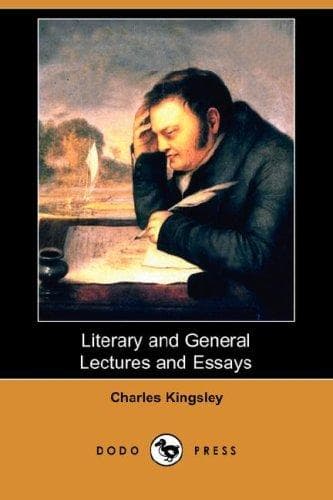
Literary and General Lectures and EssaysKingsley, Charles
History
Literary and General Lectures and Essays
Kingsley, Charles
English literature -- History and criticism
Whether he shall hereafter obey his evil angel, and follow him, or
his good angel, and become a great poet, depends upon himself; and
above all upon his having courage to be himself, and to forget
himself, two virtues which, paradoxical as it may seem, are
correlatives. For the "subjective" poet--in plain words, the
egotist--is always comparing himself with every man he meets, and
therefore momentarily tempted to steal bits of their finery wherewith
to patch his own rents; while the man who is content to be simply
what God has made him, goes on from strength to strength developing
almost unconsciously under a divine education, by which his real
personality and the salient points by which he is distinguished from
his fellows, become apparent with more and more distinctness of form,
and brilliance of light and shadow, as those well know who have
watched human character attain its clearest and grandest as well as
its loveliest outlines, not among hankerers after fame and power, but
on lonely sickbeds, and during long unknown martyrdoms of humble
self-sacrifice and loving drudgery.
But whether or not Mr. Smith shall purify himself--and he can do so,
if he will, right nobly--the world must be purified of his style of
poetry, if men are ever, as he hopes, to "set his age to music;" much
more if they are once more to stir the hearts of the many by Tyrtaean
strains, such as may be needed before our hairs are gray. The
"poetry of doubt," however pretty, would stand us in little stead if
we were threatened with a second Armada. It will conduce little to
the valour, "virtus," manhood of any Englishman to be informed by any
poet, even in the most melodious verse, illustrated by the most
startling and pan cosmic metaphors. "See what a highly-organised and
peculiar stomach-ache I have had! Does it not prove indisputably
that I am not as other men are?" What gospel there can be in such a
message to any honest man who has either to till the earth, plan a
railroad, colonise Australia, or fight his country's enemies, is hard
to discover. Hard indeed to discover how this most practical, and
therefore most poetical, of ages, is to be "set to music," when all
those who talk about so doing persist obstinately in poring, with
introverted eyes, over the state of their own digestion--or creed.
What man wants, what art wants, perhaps what the Maker of them both
wants, is a poet who shall begin by confessing that he is as other
men are, and sing about things which concern all men, in language
which all men can understand. This is the only road to that gift of
prophecy which most young poets are nowadays in such a hurry to
arrogate to themselves. We can only tell what man will be by fair
induction, by knowing what he is, what he has been.
Public-domain text, read in full here on John Shaqi.
Reviews
Reviews
No reviews yet
Be the first to share your thoughts on this work.
Join the Discussion
Join the discussion
Sign in to leave a comment or review.
Sign InorCreate an account