Facsimile of Mr. Alcott's Letter to Elizabeth, 1840 92
Abigail May, Mrs. A. Bronson Alcott, from a
Daguerreotype 106
Anna Bronson Alcott, from a Daguerreotype 122
Abba May Alcott, from a Photograph 142
Louisa May Alcott, from a Daguerreotype 160
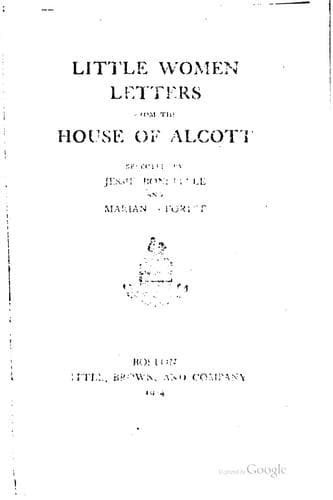
LITTLE WOMEN
LETTERS FROM THE HOUSE
OF ALCOTT
CHAPTER I
THE "REALLY, TRULY" TRUE
WHEN "Little Women," the play, reopened to many readers the pages of
"Little Women," the book, that delightful chronicle of family life,
dramatist and producer learned from many unconscious sources the depth
of Louisa M. Alcott's human appeal. Standing one night at the back of
the theater as the audience was dispersing, they listened to its
comments on the play.
"A wonderful picture of home life, only we don't have such homes," said
a big, prosperous-looking man to his wife, with a touch of regret in his
voice.
"Yes," agreed his young daughter, a tall, slender, graceful girl, as she
snuggled down cosily into her fur coat and tucked a bunch of violets
away from the touch of the frosty night, "it is beautiful; but, daddy,
it isn't real. There never was such a family."
But it is real; there was such a family, and in letters, journals, and
illustration this little book gives the history of the four Little
Women, the Alcott girls, whom Louisa immortalized in her greatest story:
Anna, who is Meg in "Little Women"; Louisa, the irrepressible and
ambitious Jo; Elizabeth, the little Beth of the book; and Abba May, the
graceful and statuesque Amy.
Rare influences were at work in this ideal American home, where the
intellectual and brilliant father was gifted in all ways except those
that led to material success, and the wise and gentle mother combined
with her loyalty and devotion to her husband a stanch, practical common
sense, which more than once served to guide the frail Alcott bark
through troubled seas.
Following her remarkable success as a writer of short stories, Louisa M.
Alcott was asked for a book. She said at first it was impossible, but
repeated requests from her publishers brought from her the announcement
that the only long story she could write would be about her own family.
"Little Women" resulted, and, in erecting this House of Delight for
young and old, Louisa Alcott builded better than she knew. Her Jo has
been the inspiration of countless girls, and the many-sidedness of her
character is indicated by the widely diverging lines of endeavor which
Jo's example has suggested to the girl readers of the story.
Public-domain text, read in full here on John Shaqi.
Reviews
Reviews
No reviews yet
Be the first to share your thoughts on this work.
Join the Discussion
Join the discussion
Sign in to leave a comment or review.
Sign InorCreate an account