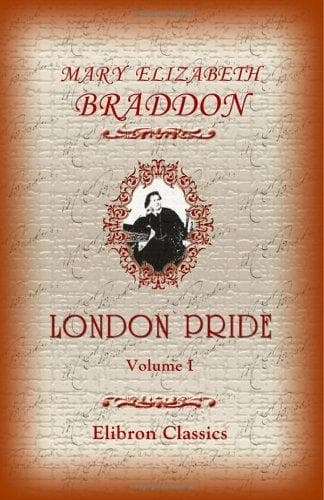
London Pride, Or, When the World Was YoungerBraddon, M. E. (Mary Elizabeth)
History
London Pride, Or, When the World Was Younger
Braddon, M. E. (Mary Elizabeth)
Great Britain -- History -- Charles II, 1660-1685 -- Fiction; London (England) -- Fiction
She asked not what manner of man this hereditary ruler might be; asked
not whether he were wise or foolish, faithful or treacherous. She
forgot all of tyranny and of double-dealing she had suffered from his
forbears. She forgot even her terror of the scarlet spectre, the grim
wolf of Rome, in her disgust at Puritan fervour which had torn down
altar-rails, usurped church pulpits, destroyed the beauty of ancient
cathedrals. Like a woman or a child, she held out her arms to the
unknown, in a natural recoil from that iron rule which had extinguished
her gaiety, silenced her noble liturgy, made innocent pleasures and
elegant arts things forbidden. She wanted her churches, and her
theatres, her cock-pits and taverns, and bear-gardens and maypoles back
again. She wanted to be ruled by the law, and not by the sword; and she
longed with a romantic longing for that young wanderer who had fled
from her shores in a fishing-boat, with his life in his hand, to return
in a glad procession of great ships dancing over summer seas, eating,
drinking, gaming, in a coat worth scarce thirty shillings, and with
empty pockets for his loyal subjects to make haste and fill.
Angela had the convent parlour all to herself this fair spring morning.
She was the favourite pupil of the nuns, had taken no vows, pledged
herself to no noviciate, ever mindful of her promise to her father. She
had lived as happily and as merrily in that abode of piety as she could
have lived in the finest palace in Europe. There were other maidens,
daughters of the French and Flemish nobility, who were taught and
reared within those sombre precincts, and with them she had played and
worked and laboured at such studies as became a young lady of quality.
Like that fair daughter of affliction, Henrietta of England, she had
gained in education by the troubles which had made her girlhood a time
of seclusion. She had been first the plaything of those elder girls who
were finishing their education in the convent, her childishness
appealing to their love and pity; and then, after being the plaything
of the nuns and the elder pupils, she became the favourite of her
contemporaries, and in a manner their queen. She was more thoughtful
than her class-fellows, in advance of her years in piety and
intelligence; and they, knowing her sad story—how she was severed from
her country and kindred, her father a wanderer with his King, her
sister bred up at a foreign Court—had first compassionated and then
admired her. From her twelfth year upwards her intellectual superiority
had been recognised in the convent, alike by the nuns and their pupils.
Her aptitude at all learning, and her simple but profound piety, had
impressed everybody. At fourteen years of age they had christened her
“the little wonder;” but later, seeing that their praises embarrassed
and even distressed her, they had desisted from such loving flatteries,
and were content to worship her with a silent adulation.
Public-domain text, read in full here on John Shaqi.
Reviews
Reviews
No reviews yet
Be the first to share your thoughts on this work.
Join the Discussion
Join the discussion
Sign in to leave a comment or review.
Sign InorCreate an account