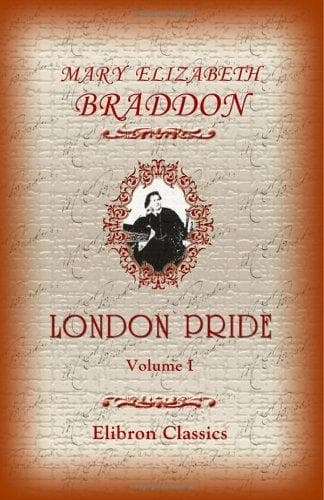
London Pride, Or, When the World Was YoungerBraddon, M. E. (Mary Elizabeth)
History
London Pride, Or, When the World Was Younger
Braddon, M. E. (Mary Elizabeth)
Great Britain -- History -- Charles II, 1660-1685 -- Fiction; London (England) -- Fiction
The ghostly repute of the place and the attraction of new milk, cheese
cakes, and syllabubs, had drawn a certain number of those satiated
pleasure-seekers who were ever on the alert for a new sensation, among
whom there was none more active or more noisy than Lady Sarah
Tewkesbury. She had made the haunted Abbey in a manner her own, had
invited her friends to midnight parties to watch for the ghost, and to
morning parties to eat syllabubs and dance on the grass. She had
brought a shower of gold into the lap of the miserly freeholder, and
had husband and wife completely under her thumb.
Doler, the husband, had fought in the civil war, and Mrs. Doler had
been a cook in the Fairfax household; but both had scrupulously sunk
all Cromwellian associations since his Majesty’s return, and in
boasting, as he often did boast, of having fought desperately and been
left for dead at the battle of Brentford, Mr. Doler had been careful to
suppress the fact that he was a hireling soldier of the Parliament. He
would weep for the martyred King, and tell the story of his own wounds,
until it is possible he had forgotten which side he had fought for, in
remembering his personal prowess and sufferings.
So far there had been disappointment as to the ghost. Sounds had been
heard of a most satisfying grimness, during those midnight and early
morning watchings; rappings, and scrapings, and scratching on the wall,
groanings and meanings, sighings and whisperings behind the wainscote;
but nothing spectral had been seen; and Mrs. Doler had been severely
reprimanded by her patrons and patronesses for the unwarrantable
conduct of a spectre which she professed to have seen as often as she
had fingers and toes.
It was the phantom of a nun—a woman of exceeding beauty, but white as
the linen which banded her cheek and brow. There was a dark story of
violated oaths, priestly sin, and the sleepless conscience of the dead,
who could not rest even in that dreadful grave where the sinner had
been immured alive, but must needs haunt the footsteps of the living, a
wandering shade. Some there were who disbelieved in the traditions of
that living grave, and who even went so far as to doubt the ghost; but
the spectre had an established repute of more than a century, was
firmly believed in by all the children and old women of the
neighbourhood, and had been written about by students of the unseen.
One of Lady Sarah’s parties took place at full moon, not long after the
visit to Deptford, and Lord Fareham’s barge was again employed, this
time on a nocturnal expedition up the river to the fields near the
haunted Abbey, to carry Hyacinth, her sister, De Malfort, Lord
Rochester, Sir Ralph Masaroon, Sir Denzil Warner, and a bevy of wits
and beauties—beauties who had, some of them, been carrying on the
beauty-business and trading in eyes and complexion for more than one
decade, and who loved that night season when paint might be laid on
thicker than in the glare of day.
Public-domain text, read in full here on John Shaqi.
Reviews
Reviews
No reviews yet
Be the first to share your thoughts on this work.
Elsewhere in the archive
Join the Discussion
Join the discussion
Sign in to leave a comment or review.
Sign InorCreate an account