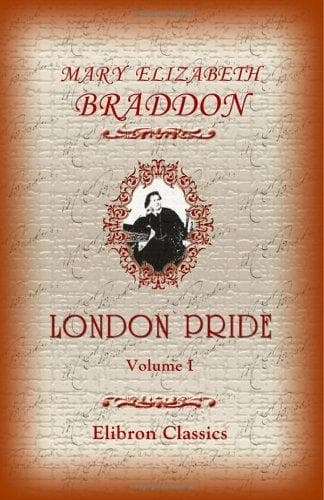
London Pride, Or, When the World Was Younger — John Shaqi
London Pride, Or, When the World Was YoungerBraddon, M. E. (Mary Elizabeth)
History
London Pride, Or, When the World Was Younger
Braddon, M. E. (Mary Elizabeth)
Great Britain -- History -- Charles II, 1660-1685 -- Fiction; London (England) -- Fiction
“Why, sweetheart, Hyacinth sees me too rarely, and is too full of her
own affairs, ever to be beforehand with my intentions; and, although I
have been long heartily sick of England, I only made up my mind to come
to Flanders less than a week ago. No sooner thought of than done. I
came by our old road, in a merchant craft from Harwich to Ostend, and
the rest of the way in the saddle. Not quite so fast as they used to
ride that carried his Majesty’s post from London to York, in the
beginning of the troubles, when the loyal gentlemen along the north
road would galop faster with despatches and treaties than ever they
rode after a stag. Ah, child, how hopeful we were in those days; and
how we all told each other it was but a passing storm at Westminster,
which could all be lulled by a little civil concession here and there
on the King’s part! And so it might, perhaps, if he would but have
conceded the right thing at the right time—yielded but just the inch
they asked for when they first asked—instead of shilly-shallying till
they got angry, and wanted ells instead of inches. ’Tis the stitch in
time, Angela, that saves trouble, in politics as well as in thy
petticoat.”
He had flung his arm round his daughter’s neck as they paced slowly
side by side.
“Have you come to stay at Louvain, sir?” she asked, timidly.
“Nay, love, the place is too quiet for me. I could not stay in a town
that is given over to learning and piety. The sound of their
everlasting carillon would tease my ear with the thought, ‘Lo, another
quarter of an hour gone of my poor remnant of days, and nothing to do
but to doze in the sunshine or fondle my spaniel, fill my pipe, or ride
a lazy horse on a level road, such as I have ever hated.’”
“But why did you tire of England, sir? I thought the King would have
wanted you always near him. You, his father’s close friend, who
suffered so much for Royal friendship. Surely he loves and cherishes
you! He must be a base, ungrateful man if he do not.”
“Oh, the King is grateful, Angela, grateful enough and to spare. He
never sees me at Court but he has some gracious speech about his
father’s regard for me. It grows irksome at last, by sheer repetition.
The turn of the sentence varies, for his Majesty has a fine standing
army of words, but the gist of the phrase is always the same, and it
means, ‘Here is a tiresome old Put to whom I must say something civil
for the sake of his ancient vicissitudes.’ And then his phalanx of
foppery stares at me as if I were a Topinambou; and since I have seen
them mimic Ned Hyde’s stately speech and manners, I doubt not before I
have crossed the ante-room I have served to make sport for the crew,
since their wit has but two phases—ordure and mimickry. Look not so
glum, daughter. I am glad to be out of a Court which is most like—such
places as I dare not name to thee.”
“But to have you disrespected, sir; you, so brave, so noble! You who
gave the best years of your life to your royal master!”
Public-domain text, read in full here on John Shaqi.
Reviews
Reviews
No reviews yet
Be the first to share your thoughts on this work.
Join the Discussion
Join the discussion
Sign in to leave a comment or review.
Sign InorCreate an account