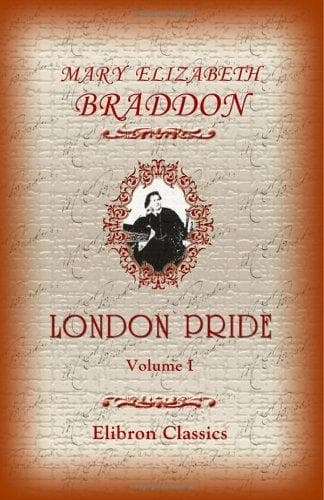
London Pride, Or, When the World Was YoungerBraddon, M. E. (Mary Elizabeth)
History
London Pride, Or, When the World Was Younger
Braddon, M. E. (Mary Elizabeth)
Great Britain -- History -- Charles II, 1660-1685 -- Fiction; London (England) -- Fiction
How still and sweet the summer air seemed in that sunset hour; how
placid the light ripple of the incoming tide; how soothing even the
silence of the city! And yet it all meant death. It was but a few
months since the fatal infection had been brought from Holland in a
bundle of merchandise: and, behold, through city and suburbs, the
pestilence had crept with slow and stealthy foot, now on this side of a
street, now on another. The history of the plague was like a game at
draughts, where man after man vanishes off the board, and the game can
only end by exhaustion.
“See, mistress, yonder is Somerset House,” said the boatman, pointing
to one of the most commanding façades in that highway of palaces. “That
is the palace which the Queen-mother has raised from the ashes of the
ruins her folly made, for the husband who loved her too well. She came
back to us no wiser for years of exile—came back with her priests and
her Italian singing-boys, her incense-bearers and golden candlesticks
and gaudy rags of Rome. She fled from England with the roar of cannon
in her ears, and the fear of death in her heart. She came back in pride
and vain-glory, and boasted that had she known the English people
better, she would never have gone away; and she has squandered
thousands in yonder palace, upon floors of coloured woods, and Italian
marbles—the people’s money, mark you, money that should have built
ships and fed sailors; and she meant to end her days among us. But a
worse enemy than Cromwell has driven her out of the house that she made
beautiful for herself; and who knows if she will ever see London
again?”
“Then those were right who told me that it was for fear of the plague
her Majesty left London?” said Angela.
“For what else should she flee? She was loth enough to leave, you may
be sure, for she had seated herself in her pride yonder, and her Court
was as splendid, and more looked up to than Queen Catherine’s. The
Queen-mother is the prouder woman, and held her head higher than her
son’s wife has ever dared to hold hers; yet there are those who say
King Charles’s widow has fallen so low as to marry Lord St. Albans, a
son of Belial, who would hazard his immortal soul on a cast of the
dice, and lose it as freely as he has squandered his royal mistress’s
money. She paid for Jermyn’s feasting and wine-bibbing in Paris, ’tis
said, when her son and his friends were on short commons.”
“You do wrong to slander that royal lady,” remonstrated Angela. “She is
of all widows the saddest and most desolate—ever the mark of evil
fortune. Even in the glorious year of her son’s restoration sorrow
pursued her, and she had to mourn a daughter and a son. She is a most
unhappy lady.”
Public-domain text, read in full here on John Shaqi.
Reviews
Reviews
No reviews yet
Be the first to share your thoughts on this work.
Join the Discussion
Join the discussion
Sign in to leave a comment or review.
Sign InorCreate an account