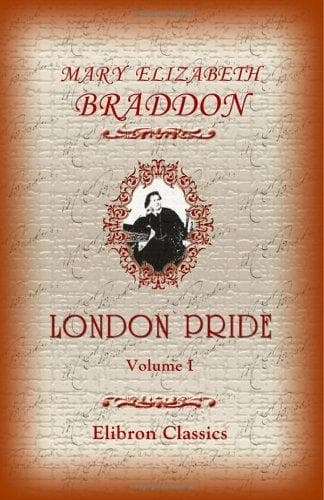
London Pride, Or, When the World Was YoungerBraddon, M. E. (Mary Elizabeth)
History
London Pride, Or, When the World Was Younger
Braddon, M. E. (Mary Elizabeth)
Great Britain -- History -- Charles II, 1660-1685 -- Fiction; London (England) -- Fiction
“Bad! Nay, I believe that all his instincts were virtuous and
honourable, and that—until the whirlwind of those latter days in which
he scarce knew what he was doing—he meant fairly by his people, and had
their welfare at heart. He might have done far better for himself and
others had he been a brave bad man like Wentworth—audacious,
unscrupulous, driving straight to a fixed goal. No, Angela, he was that
which is worse for mankind—an obstinate, weak man. A bundle of
impulses, some good and some evil; a man who had many chances, and lost
them all; who loved foolishly and too well, and let himself be ruled by
a wife who could not rule herself. Blind impulse, passionate folly were
sailing the State ship through that sea of troubles which could be
crossed but by a navigator as politic, profound, and crafty as
Richelieu or Mazarin. Who can wonder that the Royal Charles went down?”
“It must seem strange to you, looking back from the Court, as
Hyacinth’s letters have painted it—to that time of trouble?”
“Strange! I stand in the crowd at Whitehall sometimes, amidst their
masking and folly, their frolic schemes, their malice, their jeering
wit and riotous merriment, and wonder whether it is all a dream, and I
shall wake and see the England of ’44, the year Henrietta Maria
vanished—a discrowned fugitive, from the scene where she had lived to
do harm. I look along the perspective of painted faces and flowing
hair, jewels, and gay colours, towards that window through which
Charles I. walked to his bloody death, suffered with a kingly grandeur
that made the world forget all that was poor and petty in his life; and
I wonder does anyone else recall that suffering or reflect upon that
doom. Not one! Each has his jest, and his mistress—the eyes he
worships, the lips he adores. It is only the rural Put that feels
himself lost in the crowd whose thoughts turn sadly to the sad past.”
“Yet whatever your lordship may say——”
“Tush, child, I am no lordship to you! Call me brother, or Fareham; and
never talk to me as if I were anything else than your brother in
affection.”
“It is sweet to hear you say so much, sir,” she answered gently. “I
have often envied my companions at the Ursulines when they talked of
their brothers. It was so strange to hear them tell of bickering and
ill-will between brother and sister. Had God given me a brother, I
would not quarrel with him.”
“Nor shall thou quarrel with me, sweetheart; but we will be fast
friends always. Do I not owe thee my life?”
“I will not hear you say so; it is blasphemy against your Creator, who
relented and spared you.”
Public-domain text, read in full here on John Shaqi.
Reviews
Reviews
No reviews yet
Be the first to share your thoughts on this work.
Elsewhere in the archive
Join the Discussion
Join the discussion
Sign in to leave a comment or review.
Sign InorCreate an account