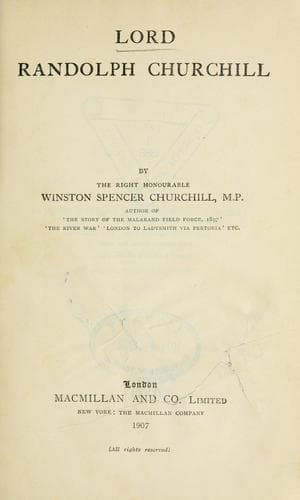
Churchill, Randolph Henry Spencer, Lord, 1849-1895
Meanwhile the second vote of censure upon the conduct of Egyptian
affairs had been debated. On May 12 Sir Michael Hicks-Beach moved: ‘That
this House regrets to find the course pursued by Her Majesty’s
Government has not tended to promote the success of General Gordon’s
mission and that even such steps as may be necessary to secure his
personal safety are delayed.’ The attack was vigorously delivered. The
Prime Minister’s reply was judged inadequate and disquieting, even by
many of his own supporters. Mr. Forster assailed him during the debate
harshly and sternly. The weight and earnestness of Lord Hartington alone
retrieved Ministerial fortunes. Lord Randolph Churchill spoke (May 13)
to a larger audience, according to the newspapers, than had gathered to
hear any other speaker; and the benches, the gangways and the spaces
below the bar and behind the Chair were all filled to overflowing.
Despite the bitterness of the struggle in the National Union, the
wrangles over the Reform Bill of almost nightly recurrence and the
antagonisms which these had excited, the Conservative members broke into
loud acclamation at his rising. Before he had spoken for a quarter of an
hour he was sustained by the cheering of the whole party. He scourged
Mr. Gladstone relentlessly. He applied to him the well-known story of
the Duke of Wellington sitting down after making a speech on Reform amid
a great buzz of conversation and, on asking the reason for the
excitement, being told: ‘My Lord Duke, you have announced the fall of
your Government.’ It was curious, he said, how different individuals
appealed to the Prime Minister’s sympathies. ‘I compared his efforts in
the cause of General Gordon with his efforts in the cause of Mr.
Bradlaugh. If a hundredth part of those invaluable moral qualities
bestowed upon the cause of a seditious blasphemer had been given to the
support of a Christian hero, the success of Gordon’s mission would have
been assured. But the finest speech he ever delivered in the House of
Commons was in support of the seditious blasphemer; and the very worst
he ever delivered, by common consent, was in the cause of the Christian
hero.’ At this there was a great tumult.
Public-domain text, read in full here on John Shaqi.
Reviews
Reviews
No reviews yet
Be the first to share your thoughts on this work.
Elsewhere in the archive
Join the Discussion
Join the discussion
Sign in to leave a comment or review.
Sign InorCreate an account