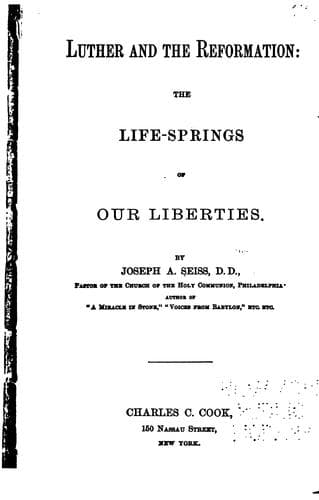
Luther and the Reformation:: The Life-Springs of Our LibertiesSeiss, Joseph Augustus
History
Luther and the Reformation:: The Life-Springs of Our Liberties
Seiss, Joseph Augustus
Luther, Martin, 1483-1546; Pennsylvania -- History -- Colonial period, ca. 1600-1775
[1] Many assumed the clerical character for no other reason than that
it might screen them from the punishment which their actions deserved,
and the monasteries were full of people who entered them to be secure
against the consequences of their crimes and atrocities.--Rymer's
_Foedera_, vol. xiii. p. 532.
EFFORTS AT REFORM.
To restrain and humble this gigantic power was the desideratum of
ages. For two hundred years had men been laboring to curb and tame it.
From theologians and universities, from kings and emperors, from
provinces and synods, from general councils, and even the College of
Cardinals--in every name of right, virtue, and religion--appeal after
appeal and solemn effort after effort were made to reform the Roman
court and free the world from the terrible oppression. Wars on wars
were waged; provinces on provinces were deluged with blood;
coalitions, bound by sacred oaths, were formed against the giant
tyranny. And yet the hierarchy managed to maintain its assumptions and
to overwhelm all remedial attempts. Whether made by individuals or
secular powers, by councils or governments, the result was the same.
The Pontificate still triumphed, with its claims unabridged, its
dominion unbroken, its scandals uncured.
A general council sat at Constance to reform the clergy in head and
members. It managed to rid itself of three popes between whom
Christendom was divided, when the emperor moved that the work of
reform proceed. But the cardinals said, How can the Church reform
itself without a head? So they elected a pope who was to lead reform.
Yet a day had hardly passed before they found themselves in a
traitor's power, who reaffirmed all the acts of the iniquitous John
XXIII., who had just been deposed for his crimes, and presently
endowed him with a cardinal's hat!
When this pope, Martin V., died, the cardinals thought to remedy their
previous mistake. They would secure their reforms before electing a
pope. So they erected themselves into a standing senate, without
which no future pope could act. And they each took solemn oath, before
God and all angels, by St. Peter and all apostles, by the holy
sacrament of Christ's body and blood, and by all the powers that be,
if elected, to conform to these arrangements and to use all the rights
and prerogatives of the sublime position to put in force the reforms
conceded to be necessary.
Public-domain text, read in full here on John Shaqi.
Reviews
Reviews
No reviews yet
Be the first to share your thoughts on this work.
Join the Discussion
Join the discussion
Sign in to leave a comment or review.
Sign InorCreate an account