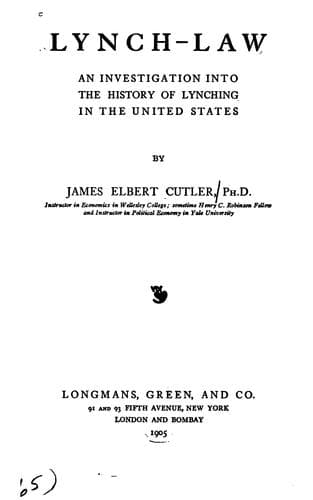
Lynch-law; an investigation into the history of lynching in the United StatesCutler, James Elbert
Philosophy
Lynch-law; an investigation into the history of lynching in the United States
Cutler, James Elbert
Lynching -- United States
When two races, occupying the same territory and living side by side,
differ so widely in their physical features, in their interests and in
their attainments, as do the white and colored races in this country, it
is most natural and indeed almost inevitable that prejudice should arise
between them. The institution of slavery has no doubt created a caste
feeling on the part of the master race, and yet this is but the
strengthening and deepening of a natural race antipathy, the causes for
which are evident. Slavery merely intensified a feeling that was due to
other causes. It is an error to say that slavery has been the cause of
all the prejudice against the negro.[235] It is true that the black race
long wore the chain of slavery and was regarded as an inferior race, and
this was true in the United States as well as elsewhere; but the reason
for the antagonistic feeling lies deeper than that fact.[236]
An indication of the existence of racial prejudice during the period of
slavery is found in a report adopted at the “Second Annual Convention of
the People of Color” which met at Philadelphia in June, 1832. This
convention, composed of free negroes, adopted a resolution in which the
following passage occurs: “The recent occurrences at the South have
swelled the tide of prejudice until it has almost revolutionized public
sentiment, which has given birth to severe legislative enactments in
some of the States, and almost ruined our interests and prospects in
others, in which, in the opinion of your Committee, our situation is
more precarious than it has been at any other period since the
Declaration of Independence. The events of the past year have been more
fruitful in persecution, and have presented more inducements than any
other period of the history of our country, for the men of color to fly
from the graves of their fathers, and seek new homes in a land where the
roaring billows of prejudice are less injurious to their rights and
privileges.”[237]
Public-domain text, read in full here on John Shaqi.
Reviews
Reviews
No reviews yet
Be the first to share your thoughts on this work.
Elsewhere in the archive
Join the Discussion
Join the discussion
Sign in to leave a comment or review.
Sign InorCreate an account