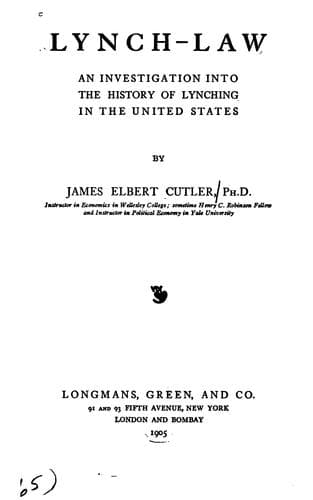
Lynch-law; an investigation into the history of lynching in the United StatesCutler, James Elbert
Philosophy
Lynch-law; an investigation into the history of lynching in the United States
Cutler, James Elbert
Lynching -- United States
Prompted by the flagrant case of lynching which occurred at Pittsburg,
Kansas, on December 25, 1902,[296] the legislature of Kansas early in
1903 authorized county commissioners to offer and pay a reward in any
sum not exceeding five hundred dollars for the discovery, arrest, and
conviction of the perpetrator or perpetrators of the “murder or lynching
of a human being committed in their county,”[297] and also enacted a
statute against lynching modelled on the Indiana act of 1899 and the
amendment of 1901.[298]
From this review of the legislation that has been enacted against
lynching it appears that an application of the following remedies has
been sought: first, an increase of the power of sheriffs and of their
responsibility for the proper discharge of the duties of their office;
second, heavier penalties for sheriffs and other officers who fail to
protect from mob violence any person lawfully in their custody; third,
heavier penalties for citizens who break into jails, or attack officers,
or hinder or obstruct legal procedure; fourth, adequate provision in the
law for the discovery, prosecution, and punishment of lynchers; fifth,
fixing responsibility upon a community by making the county in which a
lynching occurs liable for damages,[299] and giving a right of recovery
to the legal representatives of the person lynched.
Direct and definite information as to the effectiveness of these
measures in particular instances is somewhat meager, but the few cases
that have arisen in the courts afford a basis for argument.[300]
Public-domain text, read in full here on John Shaqi.
Reviews
Reviews
No reviews yet
Be the first to share your thoughts on this work.
Elsewhere in the archive
Join the Discussion
Join the discussion
Sign in to leave a comment or review.
Sign InorCreate an account