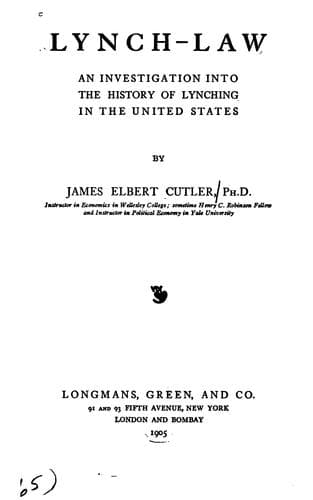
Lynch-law; an investigation into the history of lynching in the United StatesCutler, James Elbert
Philosophy
Lynch-law; an investigation into the history of lynching in the United States
Cutler, James Elbert
Lynching -- United States
To the same effect is this “Scotch View of Lynch law” which was
occasioned by the lynching of the Italians at New Orleans in 1891. After
reviewing the facts and circumstances connected with that lynching, the
following comments were made: “This is crude and it is primitive. It is
to be deplored and condemned. But it is not without a foundation of
reason and justice. The people have committed the administration of
justice to a certain machinery; so long as that machinery works without
flagrant injustice, it will be left to do the work; but when it utterly
breaks down, or goes in the teeth of what is right according to the
rough-and-ready ideas of the Americans, the people will resume the
function of dealing out punishment direct. The ultimate sanction is
brought in. That is the American method. The Briton, when he thinks the
ordinary tribunals have failed, writes to the _Times_, or gets up a
monster petition to the Home Secretary, or asks a question of the Houses
of Parliament.”[344]
In certain sections of the United States this readiness on the part of
the people to take the law into their own hands receives constant
support and encouragement from the racial antipathy which exists between
the whites and the negroes. It cannot be said that the lynching of
negroes is due to “race prejudice” alone, but it is true that the
antagonistic feeling between the two races aggravates the tendency to
lynch, when offenses are committed against white persons by negroes.
Other racial contrasts in the population have likewise promoted the
adoption of extra-legal methods of punishment. From colonial times down
to the present day the contemptuous attitude of the whites toward the
Indians has undoubtedly been a potent factor in the not infrequent
failure to observe due process of law in the treatment of Indians. In
the summary treatment of Italians, Mexicans, Chinese, and other aliens,
differences in racial characteristics have also played an important
part. In very many cases of lynching a racial antipathy has acted as the
most prominent contributory cause, and it is this fact that has induced
many writers to find in “race prejudice” the ultimate explanation of
lynching as an American institution.
Public-domain text, read in full here on John Shaqi.
Reviews
Reviews
No reviews yet
Be the first to share your thoughts on this work.
Elsewhere in the archive
Join the Discussion
Join the discussion
Sign in to leave a comment or review.
Sign InorCreate an account