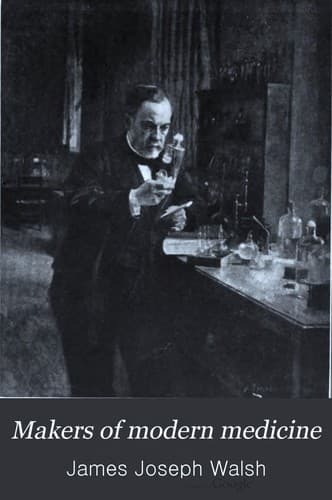
Makers of Modern MedicineWalsh, James J. (James Joseph)
History
Makers of Modern Medicine
Walsh, James J. (James Joseph)
Medicine -- Biography
[Footnote 12: Heureux celui qui porte en soi un dieu, un idéal de
beauté et qui lui obéit; idéal de l'art, idéal de la science,
idéal de la patrie, idéal des vertus de l'Evangile.]
When we turn to the panegyric of Littré in which the words occur we
find two further sentences worth noting here: "These are the living
springs of great thoughts and great actions. Everything grows clear in
the reflections from the infinite." [Footnote 13]
[Footnote 13: Ce sont les sources vives des grandes pensées et des
grandes actions. Toutes s'éclairent des reflets de l'infini.]
These words are all the more striking from the circumstances in which
they were uttered. When a vacant chair (_fauteuil_) in the French
academy is filled by the election of a new member of the Forty
Immortals, the incoming academician must give the panegyric of his
predecessor in the same chair. Pasteur was elected to the fauteuil
that had been occupied by Littré. Littré, who by forty years of
unceasing toil made a greater dictionary of the French language than
{295} the Academy has made in the nearly two hundred years devoted to
the task, was the greatest living positivist of his day. He and
Pasteur had been on terms of the greatest intimacy. Pasteur's
appreciation of his dead friend is at once sincere and hearty, but
also just and impartial. Littré had been a model of the human virtues.
Suffering had touched him deeply and found him ever ready with
compassionate response. His fellow-man had been the subject of his
deepest thoughts, though his relationship to other men appealed to him
only because of the bonds of human brotherhood. Pasteur called him a
"laic" saint. For many of us it is a source of genuine consolation and
seems a compensation for the human virtues exercised during a long
life that the great positivist died the happy death of a Christian
confident in the future life and its rewards.
But Pasteur himself rises above the merely positive. The spiritual
side of things appeals to him and other-worldliness steps in to
strengthen the merely human motives that meant so much for Littré.
Higher motives dominate the life and actions of Pasteur himself. In
the midst of his panegyric of the great positivist the greatest
scientist of his age makes his confession of faith in the things that
are above and beyond the domain of the senses--his ideals and his God.
Public-domain text, read in full here on John Shaqi.
Reviews
Reviews
No reviews yet
Be the first to share your thoughts on this work.
Elsewhere in the archive
Join the Discussion
Join the discussion
Sign in to leave a comment or review.
Sign InorCreate an account