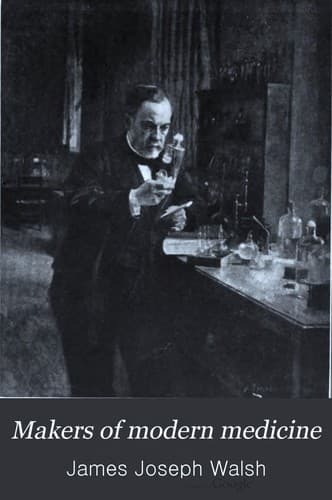
Makers of Modern MedicineWalsh, James J. (James Joseph)
History
Makers of Modern Medicine
Walsh, James J. (James Joseph)
Medicine -- Biography
The story of O'Dwyer's death serves to illustrate some of the weaker
points of modern medicine. During the nearly ten years after his
wife's death he had never been quite the same man, but had succeeded
in doing a large amount of work and had continued to care for a very
large practice. In December, 1897, he began to develop some anomalous
symptoms, pointing to a serious pathological condition within the
skull. He seemed to have had what are known as "Ménière's symptoms,"
that is, a tendency to vertigo, some ringing in the ears and other
unpleasant feelings. Toward the end of that month some hemiplegia, or
at least some weakness of one side of his body, developed. He was
rather neglectful of his personal health, as most physicians are, and
until this time had paid very little attention to his symptoms. Most
of the prominent New York consultants and nervous specialists were
called in, but there was a marked disaccord as to the cause of the
symptoms.
After some days in bed, comatose symptoms began to manifest
themselves, and on January the seventh following, after having been
lethargic for some days, Dr. O'Dwyer died. The _antemortem_ diagnosis
of his case was dubious, lying amid the possibilities of tubercular
meningitis, {355} secondary infection after otitis media, and
secondary infection from some external cause. During the previous
December, O'Dwyer had been treating a patient with carbuncle, and
developed himself a small carbuncle on his chin. By some it is thought
that infectious material from this lesion had been carried by emissary
veins or their accompanying lymphatics to the inside of the skull,
affecting the meninges, and perhaps portions of the brain-substance
itself.
The _postmortem_ examination did not entirely clear up the doubts of
diagnosis. The lateral sinus was found thrombosed, while there were
some suspicious signs in the middle ear, but no distinct inflammatory
condition. Just how the infection took place, then, is not clear, but
O'Dwyer's condition of lowered resistive vitality was evidently at
fault, to an important degree, in permitting infection to take place
and in not throwing it off afterward.
Public-domain text, read in full here on John Shaqi.
Reviews
Reviews
No reviews yet
Be the first to share your thoughts on this work.
Elsewhere in the archive
Join the Discussion
Join the discussion
Sign in to leave a comment or review.
Sign InorCreate an account