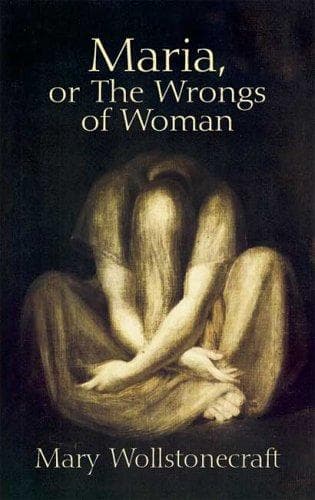
Maria; Or, The Wrongs of WomanWollstonecraft, Mary
General
Maria; Or, The Wrongs of Woman
Wollstonecraft, Mary
Autobiographical fiction; Feminist fiction; Women -- Fiction
Maria was not permitted to walk in the garden; but sometimes, from her
window, she turned her eyes from the gloomy walls, in which she pined
life away, on the poor wretches who strayed along the walks, and
contemplated the most terrific of ruins—that of a human soul. What is
the view of the fallen column, the mouldering arch, of the most
exquisite workmanship, when compared with this living memento of the
fragility, the instability, of reason, and the wild luxuriancy of
noxious passions? Enthusiasm turned adrift, like some rich stream
overflowing its banks, rushes forward with destructive velocity,
inspiring a sublime concentration of thought. Thus thought Maria—These
are the ravages over which humanity must ever mournfully ponder, with a
degree of anguish not excited by crumbling marble, or cankering brass,
unfaithful to the trust of monumental fame. It is not over the decaying
productions of the mind, embodied with the happiest art, we grieve most
bitterly. The view of what has been done by man, produces a melancholy,
yet aggrandizing, sense of what remains to be achieved by human
intellect; but a mental convulsion, which, like the devastation of an
earthquake, throws all the elements of thought and imagination into
confusion, makes contemplation giddy, and we fearfully ask on what
ground we ourselves stand.
Melancholy and imbecility marked the features of the wretches allowed
to breathe at large; for the frantic, those who in a strong imagination
had lost a sense of woe, were closely confined. The playful tricks and
mischievous devices of their disturbed fancy, that suddenly broke out,
could not be guarded against, when they were permitted to enjoy any
portion of freedom; for, so active was their imagination, that every
new object which accidentally struck their senses, awoke to phrenzy
their restless passions; as Maria learned from the burden of their
incessant ravings.
Sometimes, with a strict injunction of silence, Jemima would allow
Maria, at the close of evening, to stray along the narrow avenues that
separated the dungeon-like apartments, leaning on her arm. What a
change of scene! Maria wished to pass the threshold of her prison, yet,
when by chance she met the eye of rage glaring on her, yet unfaithful
to its office, she shrunk back with more horror and affright, than if
she had stumbled over a mangled corpse. Her busy fancy pictured the
misery of a fond heart, watching over a friend thus estranged, absent,
though present—over a poor wretch lost to reason and the social joys of
existence; and losing all consciousness of misery in its excess. What a
task, to watch the light of reason quivering in the eye, or with
agonizing expectation to catch the beam of recollection; tantalized by
hope, only to feel despair more keenly, at finding a much loved face or
voice, suddenly remembered, or pathetically implored, only to be
immediately forgotten, or viewed with indifference or abhorrence!
Public-domain text, read in full here on John Shaqi.
Reviews
Reviews
No reviews yet
Be the first to share your thoughts on this work.
Join the Discussion
Join the discussion
Sign in to leave a comment or review.
Sign InorCreate an account