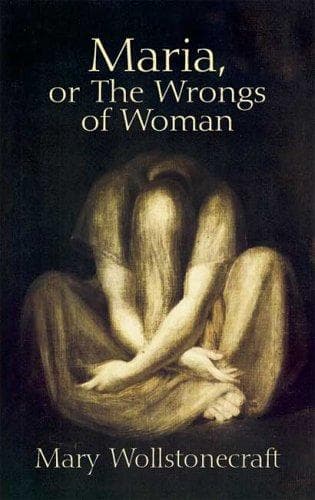
Maria; Or, The Wrongs of WomanWollstonecraft, Mary
General
Maria; Or, The Wrongs of Woman
Wollstonecraft, Mary
Autobiographical fiction; Feminist fiction; Women -- Fiction
The heart-rending sigh of melancholy sunk into her soul; and when she
retired to rest, the petrified figures she had encountered, the only
human forms she was doomed to observe, haunting her dreams with tales
of mysterious wrongs, made her wish to sleep to dream no more.
Day after day rolled away, and tedious as the present moment appeared,
they passed in such an unvaried tenor, Maria was surprised to find that
she had already been six weeks buried alive, and yet had such faint
hopes of effecting her enlargement. She was, earnestly as she had
sought for employment, now angry with herself for having been amused by
writing her narrative; and grieved to think that she had for an instant
thought of any thing, but contriving to escape.
Jemima had evidently pleasure in her society: still, though she often
left her with a glow of kindness, she returned with the same chilling
air; and, when her heart appeared for a moment to open, some suggestion
of reason forcibly closed it, before she could give utterance to the
confidence Maria’s conversation inspired.
Discouraged by these changes, Maria relapsed into despondency, when she
was cheered by the alacrity with which Jemima brought her a fresh
parcel of books; assuring her, that she had taken some pains to obtain
them from one of the keepers, who attended a gentleman confined in the
opposite corner of the gallery.
Maria took up the books with emotion. “They come,” said she, “perhaps,
from a wretch condemned, like me, to reason on the nature of madness,
by having wrecked minds continually under his eye; and almost to wish
himself—as I do—mad, to escape from the contemplation of it.” Her heart
throbbed with sympathetic alarm; and she turned over the leaves with
awe, as if they had become sacred from passing through the hands of an
unfortunate being, oppressed by a similar fate.
Dryden’s Fables, Milton’s Paradise Lost, with several modern
productions, composed the collection. It was a mine of treasure. Some
marginal notes, in Dryden’s Fables, caught her attention: they were
written with force and taste; and, in one of the modern pamphlets,
there was a fragment left, containing various observations on the
present state of society and government, with a comparative view of the
politics of Europe and America. These remarks were written with a
degree of generous warmth, when alluding to the enslaved state of the
labouring majority, perfectly in unison with Maria’s mode of thinking.
She read them over and over again; and fancy, treacherous fancy, began
to sketch a character, congenial with her own, from these shadowy
outlines.—“Was he mad?” She reperused the marginal notes, and they
seemed the production of an animated, but not of a disturbed
imagination. Confined to this speculation, every time she re-read them,
some fresh refinement of sentiment, or acuteness of thought impressed
her, which she was astonished at herself for not having before
observed.
Public-domain text, read in full here on John Shaqi.
Reviews
Reviews
No reviews yet
Be the first to share your thoughts on this work.
Join the Discussion
Join the discussion
Sign in to leave a comment or review.
Sign InorCreate an account