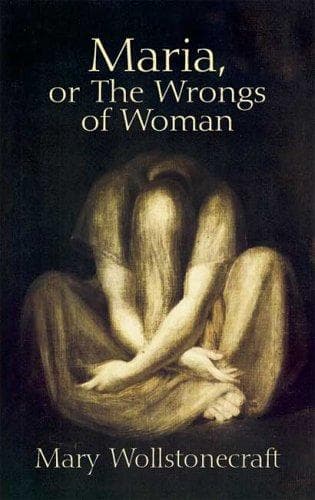
Maria; Or, The Wrongs of WomanWollstonecraft, Mary
General
Maria; Or, The Wrongs of Woman
Wollstonecraft, Mary
Autobiographical fiction; Feminist fiction; Women -- Fiction
By the most pressing intreaties, Maria prevailed on Jemima to permit
her to write a reply to this note. Another and another succeeded, in
which explanations were not allowed relative to their present
situation; but Maria, with sufficient explicitness, alluded to a former
obligation; and they insensibly entered on an interchange of sentiments
on the most important subjects. To write these letters was the business
of the day, and to receive them the moment of sunshine. By some means,
Darnford having discovered Maria’s window, when she next appeared at
it, he made her, behind his keepers, a profound bow of respect and
recognition.
Two or three weeks glided away in this kind of intercourse, during
which period Jemima, to whom Maria had given the necessary information
respecting her family, had evidently gained some intelligence, which
increased her desire of pleasing her charge, though she could not yet
determine to liberate her. Maria took advantage of this favourable
charge, without too minutely enquiring into the cause; and such was her
eagerness to hold human converse, and to see her former protector,
still a stranger to her, that she incessantly requested her guard to
gratify her more than curiosity.
Writing to Darnford, she was led from the sad objects before her, and
frequently rendered insensible to the horrid noises around her, which
previously had continually employed her feverish fancy. Thinking it
selfish to dwell on her own sufferings, when in the midst of wretches,
who had not only lost all that endears life, but their very selves, her
imagination was occupied with melancholy earnestness to trace the mazes
of misery, through which so many wretches must have passed to this
gloomy receptacle of disjointed souls, to the grand source of human
corruption. Often at midnight was she waked by the dismal shrieks of
demoniac rage, or of excruciating despair, uttered in such wild tones
of indescribable anguish as proved the total absence of reason, and
roused phantoms of horror in her mind, far more terrific than all that
dreaming superstition ever drew. Besides, there was frequently
something so inconceivably picturesque in the varying gestures of
unrestrained passion, so irresistibly comic in their sallies, or so
heart-piercingly pathetic in the little airs they would sing,
frequently bursting out after an awful silence, as to fascinate the
attention, and amuse the fancy, while torturing the soul. It was the
uproar of the passions which she was compelled to observe; and to mark
the lucid beam of reason, like a light trembling in a socket, or like
the flash which divides the threatening clouds of angry heaven only to
display the horrors which darkness shrouded.
Public-domain text, read in full here on John Shaqi.
Reviews
Reviews
No reviews yet
Be the first to share your thoughts on this work.
Join the Discussion
Join the discussion
Sign in to leave a comment or review.
Sign InorCreate an account