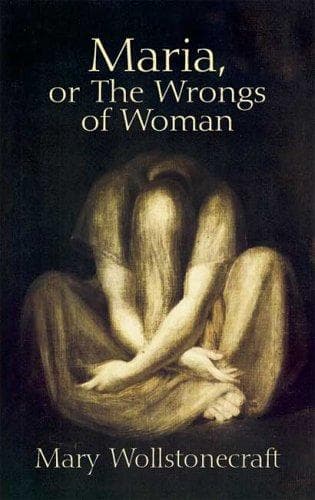
Maria; Or, The Wrongs of WomanWollstonecraft, Mary
General
Maria; Or, The Wrongs of Woman
Wollstonecraft, Mary
Autobiographical fiction; Feminist fiction; Women -- Fiction
Maria was again true to the hour, yet had finished Rousseau, and begun
to transcribe some selected passages; unable to quit either the author
or the window, before she had a glimpse of the countenance she daily
longed to see; and, when seen, it conveyed no distinct idea to her mind
where she had seen it before. He must have been a transient
acquaintance; but to discover an acquaintance was fortunate, could she
contrive to attract his attention, and excite his sympathy.
Every glance afforded colouring for the picture she was delineating on
her heart; and once, when the window was half open, the sound of his
voice reached her. Conviction flashed on her; she had certainly, in a
moment of distress, heard the same accents. They were manly, and
characteristic of a noble mind; nay, even sweet—or sweet they seemed to
her attentive ear.
She started back, trembling, alarmed at the emotion a strange
coincidence of circumstances inspired, and wondering why she thought so
much of a stranger, obliged as she had been by his timely interference;
[for she recollected, by degrees all the circumstances of their former
meeting.] She found however that she could think of nothing else; or,
if she thought of her daughter, it was to wish that she had a father
whom her mother could respect and love.
CHAPTER 3
When perusing the first parcel of books, Maria had, with her pencil,
written in one of them a few exclamations, expressive of compassion and
sympathy, which she scarcely remembered, till turning over the leaves
of one of the volumes, lately brought to her, a slip of paper dropped
out, which Jemima hastily snatched up.
“Let me see it,” demanded Maria impatiently, “You surely are not afraid
of trusting me with the effusions of a madman?” “I must consider,”
replied Jemima; and withdrew, with the paper in her hand.
In a life of such seclusion, the passions gain undue force; Maria
therefore felt a great degree of resentment and vexation, which she had
not time to subdue, before Jemima, returning, delivered the paper.
“Whoever you are, who partake of my fate, accept my sincere
commiseration—I would have said protection; but the privilege of man is
denied me.
“My own situation forces a dreadful suspicion on my mind—I may not
always languish in vain for freedom—say are you—I cannot ask the
question; yet I will remember you when my remembrance can be of any
use. I will enquire, why you are so mysteriously detained—and I will
have an answer.
“HENRY DARNFORD.”
Public-domain text, read in full here on John Shaqi.
Reviews
Reviews
No reviews yet
Be the first to share your thoughts on this work.
Join the Discussion
Join the discussion
Sign in to leave a comment or review.
Sign InorCreate an account