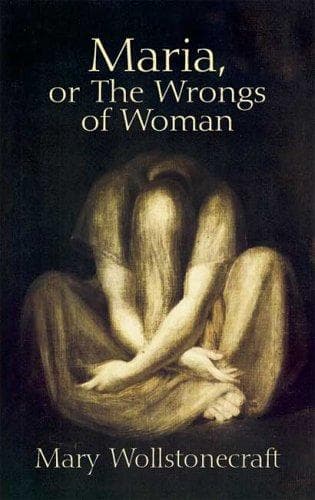
Maria; Or, The Wrongs of WomanWollstonecraft, Mary
General
Maria; Or, The Wrongs of Woman
Wollstonecraft, Mary
Autobiographical fiction; Feminist fiction; Women -- Fiction
Jemima entering, he reflected on his diffidence with poignant regret,
and, she once more taking alarm, he ventured, as Maria stood near his
chair, to approach her lips with a declaration of love. She drew back
with solemnity, he hung down his head abashed; but lifting his eyes
timidly, they met her’s; she had determined, during that instant, and
suffered their rays to mingle. He took, with more ardour, reassured, a
half-consenting, half-reluctant kiss, reluctant only from modesty; and
there was a sacredness in her dignified manner of reclining her glowing
face on his shoulder, that powerfully impressed him. Desire was lost in
more ineffable emotions, and to protect her from insult and sorrow—to
make her happy, seemed not only the first wish of his heart, but the
most noble duty of his life. Such angelic confidence demanded the
fidelity of honour; but could he, feeling her in every pulsation, could
he ever change, could he be a villain? The emotion with which she, for
a moment, allowed herself to be pressed to his bosom, the tear of
rapturous sympathy, mingled with a soft melancholy sentiment of
recollected disappointment, said—more of truth and faithfulness, than
the tongue could have given utterance to in hours! They were silent—yet
discoursed, how eloquently? till, after a moment’s reflection, Maria
drew her chair by the side of his, and, with a composed sweetness of
voice, and supernatural benignity of countenance, said, “I must open my
whole heart to you; you must be told who I am, why I am here, and why,
telling you I am a wife, I blush not to”—the blush spoke the rest.
Jemima was again at her elbow, and the restraint of her presence did
not prevent an animated conversation, in which love, sly urchin, was
ever at bo-peep.
So much of heaven did they enjoy, that paradise bloomed around them; or
they, by a powerful spell, had been transported into Armida’s garden.
Love, the grand enchanter, “lapt them in Elysium,” and every sense was
harmonized to joy and social extacy. So animated, indeed, were their
accents of tenderness, in discussing what, in other circumstances,
would have been commonplace subjects, that Jemima felt, with surprise,
a tear of pleasure trickling down her rugged cheeks. She wiped it away,
half ashamed; and when Maria kindly enquired the cause, with all the
eager solicitude of a happy being wishing to impart to all nature its
overflowing felicity, Jemima owned that it was the first tear that
social enjoyment had ever drawn from her. She seemed indeed to breathe
more freely; the cloud of suspicion cleared away from her brow; she
felt herself, for once in her life, treated like a fellow-creature.
Public-domain text, read in full here on John Shaqi.
Reviews
Reviews
No reviews yet
Be the first to share your thoughts on this work.
Join the Discussion
Join the discussion
Sign in to leave a comment or review.
Sign InorCreate an account