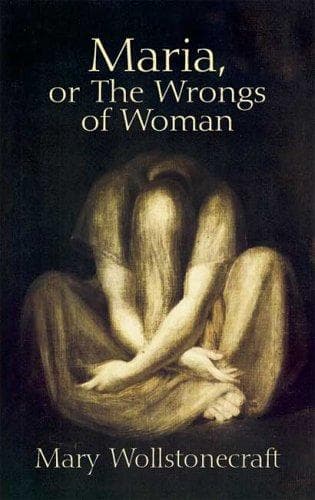
Maria; Or, The Wrongs of WomanWollstonecraft, Mary
General
Maria; Or, The Wrongs of Woman
Wollstonecraft, Mary
Autobiographical fiction; Feminist fiction; Women -- Fiction
There are mistakes of conduct which at five-and-twenty prove the
strength of the mind, that, ten or fifteen years after, would
demonstrate its weakness, its incapacity to acquire a sane judgment.
The youths who are satisfied with the ordinary pleasures of life, and
do not sigh after ideal phantoms of love and friendship, will never
arrive at great maturity of understanding; but if these reveries are
cherished, as is too frequently the case with women, when experience
ought to have taught them in what human happiness consists, they become
as useless as they are wretched. Besides, their pains and pleasures are
so dependent on outward circumstances, on the objects of their
affections, that they seldom act from the impulse of a nerved mind,
able to choose its own pursuit.
Having had to struggle incessantly with the vices of mankind, Maria’s
imagination found repose in pourtraying the possible virtues the world
might contain. Pygmalion formed an ivory maid, and longed for an
informing soul. She, on the contrary, combined all the qualities of a
hero’s mind, and fate presented a statue in which she might enshrine
them.
We mean not to trace the progress of this passion, or recount how often
Darnford and Maria were obliged to part in the midst of an interesting
conversation. Jemima ever watched on the tip-toe of fear, and
frequently separated them on a false alarm, when they would have given
worlds to remain a little longer together.
A magic lamp now seemed to be suspended in Maria’s prison, and fairy
landscapes flitted round the gloomy walls, late so blank. Rushing from
the depth of despair, on the seraph wing of hope, she found herself
happy.—She was beloved, and every emotion was rapturous.
To Darnford she had not shown a decided affection; the fear of
outrunning his, a sure proof of love, made her often assume a coldness
and indifference foreign from her character; and, even when giving way
to the playful emotions of a heart just loosened from the frozen bond
of grief, there was a delicacy in her manner of expressing her
sensibility, which made him doubt whether it was the effect of love.
One evening, when Jemima left them, to listen to the sound of a distant
footstep, which seemed cautiously to approach, he seized Maria’s
hand—it was not withdrawn. They conversed with earnestness of their
situation; and, during the conversation, he once or twice gently drew
her towards him. He felt the fragrance of her breath, and longed, yet
feared, to touch the lips from which it issued; spirits of purity
seemed to guard them, while all the enchanting graces of love sported
on her cheeks, and languished in her eyes.
Public-domain text, read in full here on John Shaqi.
Reviews
Reviews
No reviews yet
Be the first to share your thoughts on this work.
Join the Discussion
Join the discussion
Sign in to leave a comment or review.
Sign InorCreate an account