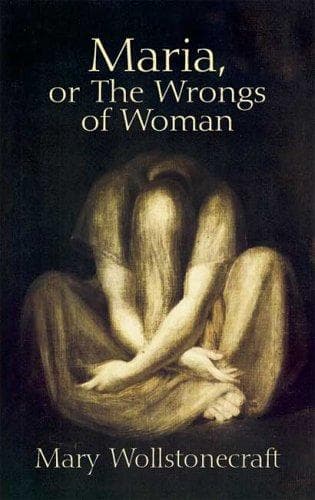
Maria; Or, The Wrongs of WomanWollstonecraft, Mary
General
Maria; Or, The Wrongs of Woman
Wollstonecraft, Mary
Autobiographical fiction; Feminist fiction; Women -- Fiction
Abodes of horror have frequently been described, and castles, filled
with spectres and chimeras, conjured up by the magic spell of genius to
harrow the soul, and absorb the wondering mind. But, formed of such
stuff as dreams are made of, what were they to the mansion of despair,
in one corner of which Maria sat, endeavouring to recall her scattered
thoughts!
Surprise, astonishment, that bordered on distraction, seemed to have
suspended her faculties, till, waking by degrees to a keen sense of
anguish, a whirlwind of rage and indignation roused her torpid pulse.
One recollection with frightful velocity following another, threatened
to fire her brain, and make her a fit companion for the terrific
inhabitants, whose groans and shrieks were no unsubstantial sounds of
whistling winds, or startled birds, modulated by a romantic fancy,
which amuse while they affright; but such tones of misery as carry a
dreadful certainty directly to the heart. What effect must they then
have produced on one, true to the touch of sympathy, and tortured by
maternal apprehension!
Her infant’s image was continually floating on Maria’s sight, and the
first smile of intelligence remembered, as none but a mother, an
unhappy mother, can conceive. She heard her half speaking half cooing,
and felt the little twinkling fingers on her burning bosom—a bosom
bursting with the nutriment for which this cherished child might now be
pining in vain. From a stranger she could indeed receive the maternal
aliment, Maria was grieved at the thought—but who would watch her with
a mother’s tenderness, a mother’s self-denial?
The retreating shadows of former sorrows rushed back in a gloomy train,
and seemed to be pictured on the walls of her prison, magnified by the
state of mind in which they were viewed—Still she mourned for her
child, lamented she was a daughter, and anticipated the aggravated ills
of life that her sex rendered almost inevitable, even while dreading
she was no more. To think that she was blotted out of existence was
agony, when the imagination had been long employed to expand her
faculties; yet to suppose her turned adrift on an unknown sea, was
scarcely less afflicting.
Public-domain text, read in full here on John Shaqi.
Reviews
Reviews
No reviews yet
Be the first to share your thoughts on this work.
Join the Discussion
Join the discussion
Sign in to leave a comment or review.
Sign InorCreate an account