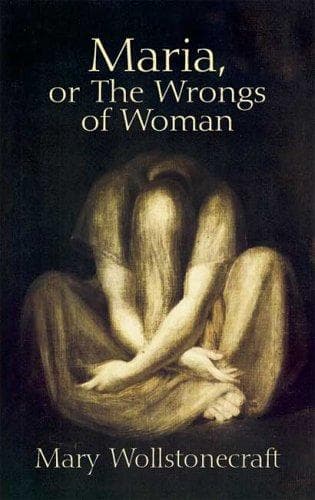
Maria; Or, The Wrongs of WomanWollstonecraft, Mary
General
Maria; Or, The Wrongs of Woman
Wollstonecraft, Mary
Autobiographical fiction; Feminist fiction; Women -- Fiction
Earnestly as Maria endeavoured to soothe, by reading, the anguish of
her wounded mind, her thoughts would often wander from the subject she
was led to discuss, and tears of maternal tenderness obscured the
reasoning page. She descanted on “the ills which flesh is heir to,”
with bitterness, when the recollection of her babe was revived by a
tale of fictitious woe, that bore any resemblance to her own; and her
imagination was continually employed, to conjure up and embody the
various phantoms of misery, which folly and vice had let loose on the
world. The loss of her babe was the tender string; against other cruel
remembrances she laboured to steel her bosom; and even a ray of hope,
in the midst of her gloomy reveries, would sometimes gleam on the dark
horizon of futurity, while persuading herself that she ought to cease
to hope, since happiness was no where to be found.—But of her child,
debilitated by the grief with which its mother had been assailed before
it saw the light, she could not think without an impatient struggle.
“I, alone, by my active tenderness, could have saved,” she would
exclaim, “from an early blight, this sweet blossom; and, cherishing it,
I should have had something still to love.”
In proportion as other expectations were torn from her, this tender one
had been fondly clung to, and knit into her heart.
The books she had obtained, were soon devoured, by one who had no other
resource to escape from sorrow, and the feverish dreams of ideal
wretchedness or felicity, which equally weaken the intoxicated
sensibility. Writing was then the only alternative, and she wrote some
rhapsodies descriptive of the state of her mind; but the events of her
past life pressing on her, she resolved circumstantially to relate
them, with the sentiments that experience, and more matured reason,
would naturally suggest. They might perhaps instruct her daughter, and
shield her from the misery, the tyranny, her mother knew not how to
avoid.
This thought gave life to her diction, her soul flowed into it, and she
soon found the task of recollecting almost obliterated impressions very
interesting. She lived again in the revived emotions of youth, and
forgot her present in the retrospect of sorrows that had assumed an
unalterable character.
Though this employment lightened the weight of time, yet, never losing
sight of her main object, Maria did not allow any opportunity to slip
of winning on the affections of Jemima; for she discovered in her a
strength of mind, that excited her esteem, clouded as it was by the
misanthropy of despair.
Public-domain text, read in full here on John Shaqi.
Reviews
Reviews
No reviews yet
Be the first to share your thoughts on this work.
Join the Discussion
Join the discussion
Sign in to leave a comment or review.
Sign InorCreate an account