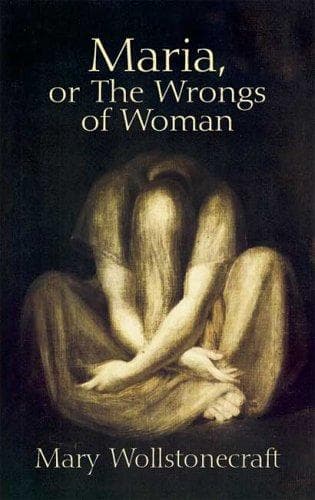
Maria; Or, The Wrongs of WomanWollstonecraft, Mary
General
Maria; Or, The Wrongs of Woman
Wollstonecraft, Mary
Autobiographical fiction; Feminist fiction; Women -- Fiction
Though she failed immediately to rouse a lively sense of injustice in
the mind of her guard, because it had been sophisticated into
misanthropy, she touched her heart. Jemima (she had only a claim to a
Christian name, which had not procured her any Christian privileges)
could patiently hear of Maria’s confinement on false pretences; she had
felt the crushing hand of power, hardened by the exercise of injustice,
and ceased to wonder at the perversions of the understanding, which
systematize oppression; but, when told that her child, only four months
old, had been torn from her, even while she was discharging the
tenderest maternal office, the woman awoke in a bosom long estranged
from feminine emotions, and Jemima determined to alleviate all in her
power, without hazarding the loss of her place, the sufferings of a
wretched mother, apparently injured, and certainly unhappy. A sense of
right seems to result from the simplest act of reason, and to preside
over the faculties of the mind, like the master-sense of feeling, to
rectify the rest; but (for the comparison may be carried still farther)
how often is the exquisite sensibility of both weakened or destroyed by
the vulgar occupations, and ignoble pleasures of life?
The preserving her situation was, indeed, an important object to
Jemima, who had been hunted from hole to hole, as if she had been a
beast of prey, or infected with a moral plague. The wages she received,
the greater part of which she hoarded, as her only chance for
independence, were much more considerable than she could reckon on
obtaining any where else, were it possible that she, an outcast from
society, could be permitted to earn a subsistence in a reputable
family. Hearing Maria perpetually complain of listlessness, and the not
being able to beguile grief by resuming her customary pursuits, she was
easily prevailed on, by compassion, and that involuntary respect for
abilities, which those who possess them can never eradicate, to bring
her some books and implements for writing. Maria’s conversation had
amused and interested her, and the natural consequence was a desire,
scarcely observed by herself, of obtaining the esteem of a person she
admired. The remembrance of better days was rendered more lively; and
the sentiments then acquired appearing less romantic than they had for
a long period, a spark of hope roused her mind to new activity.
How grateful was her attention to Maria! Oppressed by a dead weight of
existence, or preyed on by the gnawing worm of discontent, with what
eagerness did she endeavour to shorten the long days, which left no
traces behind! She seemed to be sailing on the vast ocean of life,
without seeing any land-mark to indicate the progress of time; to find
employment was then to find variety, the animating principle of nature.
CHAPTER 2
Public-domain text, read in full here on John Shaqi.
Reviews
Reviews
No reviews yet
Be the first to share your thoughts on this work.
Join the Discussion
Join the discussion
Sign in to leave a comment or review.
Sign InorCreate an account