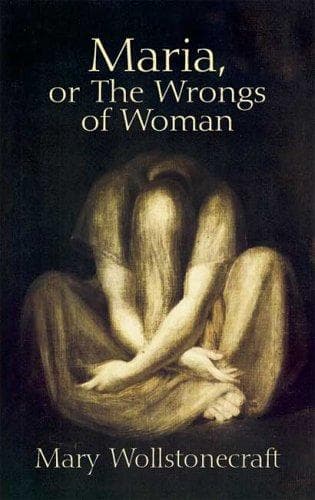
Maria; Or, The Wrongs of WomanWollstonecraft, Mary
General
Maria; Or, The Wrongs of Woman
Wollstonecraft, Mary
Autobiographical fiction; Feminist fiction; Women -- Fiction
Some lines were here crossed out, and the memoirs broke off abruptly
with the names of Jemima and Darnford.
APPENDIX
ADVERTISEMENT[11]
The performance, with a fragment of which the reader has now been
presented, was designed to consist of three parts. The preceding sheets
were considered as constituting one of those parts. Those persons who
in the perusal of the chapters, already written and in some degree
finished by the author, have felt their hearts awakened, and their
curiosity excited as to the sequel of the story, will, of course,
gladly accept even of the broken paragraphs and half-finished
sentences, which have been found committed to paper, as materials for
the remainder. The fastidious and cold-hearted critic may perhaps feel
himself repelled by the incoherent form in which they are presented.
But an inquisitive temper willingly accepts the most imperfect and
mutilated information, where better is not to be had: and readers, who
in any degree resemble the author in her quick apprehension of
sentiment, and of the pleasures and pains of imagination, will, I
believe, find gratification, in contemplating sketches, which were
designed in a short time to have received the finishing touches of her
genius; but which must now for ever remain a mark to record the
triumphs of mortality, over schemes of usefulness, and projects of
public interest.
[11] Presumed to have been written by Godwin [Publisher’s note].
CHAPTER 15
Darnford returned the memoirs to Maria, with a most affectionate
letter, in which he reasoned on “the absurdity of the laws respecting
matrimony, which, till divorces could be more easily obtained, was,” he
declared, “the most insufferable bondage.” Ties of this nature could
not bind minds governed by superior principles; and such beings were
privileged to act above the dictates of laws they had no voice in
framing, if they had sufficient strength of mind to endure the natural
consequence. In her case, to talk of duty, was a farce, excepting what
was due to herself. Delicacy, as well as reason, forbade her ever to
think of returning to her husband: was she then to restrain her
charming sensibility through mere prejudice? These arguments were not
absolutely impartial, for he disdained to conceal, that, when he
appealed to her reason, he felt that he had some interest in her
heart.—The conviction was not more transporting, than sacred—a thousand
times a day, he asked himself how he had merited such happiness?—and as
often he determined to purify the heart she deigned to inhabit—He
intreated to be again admitted to her presence.
Public-domain text, read in full here on John Shaqi.
Reviews
Reviews
No reviews yet
Be the first to share your thoughts on this work.
Elsewhere in the archive
Join the Discussion
Join the discussion
Sign in to leave a comment or review.
Sign InorCreate an account