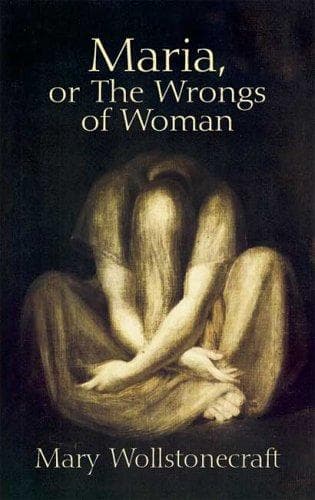
Maria; Or, The Wrongs of WomanWollstonecraft, Mary
General
Maria; Or, The Wrongs of Woman
Wollstonecraft, Mary
Autobiographical fiction; Feminist fiction; Women -- Fiction
He was; and the tear which glistened in his eye, when he respectfully
pressed her to his bosom, rendered him peculiarly dear to the
unfortunate mother. Grief had stilled the transports of love, only to
render their mutual tenderness more touching. In former interviews,
Darnford had contrived, by a hundred little pretexts, to sit near her,
to take her hand, or to meet her eyes—now it was all soothing
affection, and esteem seemed to have rivalled love. He adverted to her
narrative, and spoke with warmth of the oppression she had endured.—His
eyes, glowing with a lambent flame, told her how much he wished to
restore her to liberty and love; but he kissed her hand, as if it had
been that of a saint; and spoke of the loss of her child, as if it had
been his own.—What could have been more flattering to Maria?—Every
instance of self-denial was registered in her heart, and she loved him,
for loving her too well to give way to the transports of passion.
They met again and again; and Darnford declared, while passion suffused
his cheeks, that he never before knew what it was to love.—
One morning Jemima informed Maria, that her master intended to wait on
her, and speak to her without witnesses. He came, and brought a letter
with him, pretending that he was ignorant of its contents, though he
insisted on having it returned to him. It was from the attorney already
mentioned, who informed her of the death of her child, and hinted,
“that she could not now have a legitimate heir, and that, would she
make over the half of her fortune during life, she should be conveyed
to Dover, and permitted to pursue her plan of travelling.”
Maria answered with warmth, “That she had no terms to make with the
murderer of her babe, nor would she purchase liberty at the price of
her own respect.”
She began to expostulate with her jailor; but he sternly bade her “Be
silent—he had not gone so far, not to go further.”
Darnford came in the evening. Jemima was obliged to be absent, and she,
as usual, locked the door on them, to prevent interruption or
discovery.—The lovers were, at first, embarrassed; but fell insensibly
into confidential discourse. Darnford represented, “that they might
soon be parted,” and wished her “to put it out of the power of fate to
separate them.”
As her husband she now received him, and he solemnly pledged himself as
her protector—and eternal friend.—
Public-domain text, read in full here on John Shaqi.
Reviews
Reviews
No reviews yet
Be the first to share your thoughts on this work.
Elsewhere in the archive
Join the Discussion
Join the discussion
Sign in to leave a comment or review.
Sign InorCreate an account