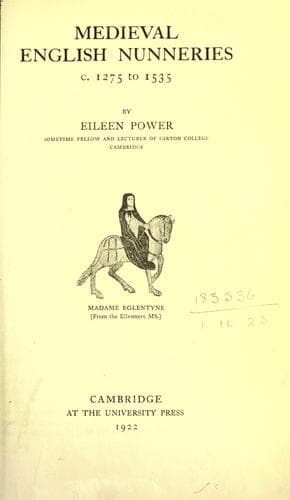
Medieval English Nunneries c. 1275 to 1535Power, Eileen
History
Medieval English Nunneries c. 1275 to 1535
Power, Eileen
Convents -- England; Monastic and religious life of women -- History
This account of the attempts of medieval bishops to prevent the nunneries
from burdening themselves with inmates, beyond the number which could be
supported by their revenues, leads to a consideration of the other methods
employed by them to remedy the financial distress in which the nuns so
often found themselves. These methods may be divided into three classes;
(1) arrangements to safeguard expenditure by the head of the house and to
impose a check upon autocracy, (2) arrangements to prevent rash
expenditure or improvident means of raising money, by requiring episcopal
consent before certain steps could be taken, and (3) if the incompetence
of the nuns were such that even these restrictions were insufficient, the
appointment of a male _custos_, master or guardian, to manage the finances
of the house.
Arrangements for safeguarding expenditure by the head of the house were of
four kinds: (1) provision for the consultation of the whole convent in
important negotiations, (2) provision for the safe custody of the common
seal, (3) provision for the regular presentation of accounts, and (4) the
appointment of coadjutresses to the Prioress, or of two or three
treasuresses, to be jointly responsible for receipts and expenditure. It
was a common injunction that the whole convent, or at least "the more and
sounder part of it," should be consulted in all important negotiations,
such as the alienation of property, the leasing of land and farms, the
cutting down of woods, the incurring of debts and the reception of
novices[711]. It has already been shown that Prioresses acted
autocratically in performing such business on their own initiative, and
the injunction sent by Peckham to the Abbess of Romsey shows the lengths
to which this independence might lead them[712]. Flemyng's injunction to
Elstow in 1421-2 is typical:
That the Abbess deliver not nor demise to farm appropriated churches,
pensions, portions, manors or granges belonging to the monastery, nor
do any other such weighty business, without the express consent of the
greater and sounder part of the convent[713].
Public-domain text, read in full here on John Shaqi.
Reviews
Reviews
No reviews yet
Be the first to share your thoughts on this work.
Elsewhere in the archive
Join the Discussion
Join the discussion
Sign in to leave a comment or review.
Sign InorCreate an account