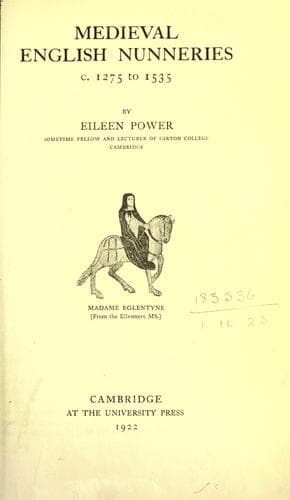
Medieval English Nunneries c. 1275 to 1535Power, Eileen
History
Medieval English Nunneries c. 1275 to 1535
Power, Eileen
Convents -- England; Monastic and religious life of women -- History
These three documents, the Constitutions of Ottobon and of Peckham and the
Bull _Periculoso_, were the standard decrees on the subject of the
claustration of nuns in England and were used as a model by visitors in
the thirteenth and fourteenth centuries. William of Wykeham, for example,
in the exceptionally full and formal injunctions which he sent to Romsey
and to Wherwell in 1387 continually refers by name to Ottobon and to
Peckham, and the wording of the Bull _Periculoso_ is followed _verbatim_
in the mandate directed by Bishop Grandisson of Exeter to Canonsleigh in
1329 and in the commission sent by his successor Bishop Brantyngham to two
canons of Exeter in 1376, concerning the wanderings of the nuns of
Polsloe. But a study of the visitation documents of the thirteenth and
fourteenth centuries makes it clear that the nuns never really made any
attempt to obey the regulations which imposed a strict enclosure upon
them; and that the bishops upon whom fell the brunt of administering
_Periculoso_ themselves allowed a considerable latitude, directing their
efforts towards regulating the conditions under which nuns left their
convents, rather than to keeping them within the precincts. _Le mieux est
l'ennemi du bien_ and the steady opposition of the nuns forced a
compromise upon their visitors. The canonist John of Ayton, reciting the
decrees of Ottobon and of Boniface, with their injunction that bishops
shall "cause them to be observed," exclaims
Cause to be observed! But surely there is scarce any mortal man who
could do this: we must therefore here understand "so far as lieth in
the prelate's power." For the nuns answer roundly to these statutes or
to any others promulgated against their wantonness, saying "In truth
the men who made these laws sat well at their ease, while they laid
such burdens upon us by these hard and intolerable restrictions!"
Wherefore we see in fact that these statutes are a dead letter or are
ill-kept at the best. Why, then, did the holy fathers thus labour to
beat the air? Yet indeed their toil is none the less to their own
merit; for we look not to that which is but to that which of justice
should be[1101].
Public-domain text, read in full here on John Shaqi.
Reviews
Reviews
No reviews yet
Be the first to share your thoughts on this work.
Elsewhere in the archive
Join the Discussion
Join the discussion
Sign in to leave a comment or review.
Sign InorCreate an account