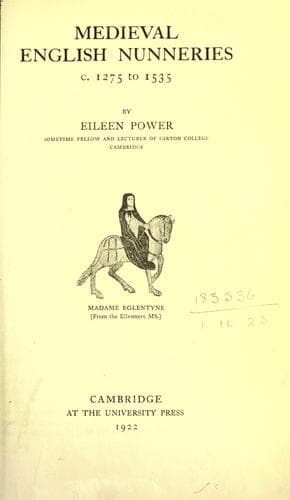
Medieval English Nunneries c. 1275 to 1535Power, Eileen
History
Medieval English Nunneries c. 1275 to 1535
Power, Eileen
Convents -- England; Monastic and religious life of women -- History
Moreover even if nuns visited their friends for a very short time, staying
only one night, or even returning before nightfall to the convent, there
was danger that they might join in the various revelries practised among
secular folk, and reprobated by the Church as occasions for unseemly and
licentious behaviour. Bishop Spofford of Hereford, indeed, found it
necessary in 1437 to send a special warning against doing so to the nuns
of Lymbrook; the Prioress was to "yife no lycence too noon of hur sustres
her after to go to no port townes, no to noon othir townes to comyn wakes
or festes, spectacles and othir worldly vanytees, and specially on
holy-dayes, nor to be absent lyggying oute by nyght out of thair
monastery, but with fader and moder, except causes of necessytee"[1177].
The words which the Good Wife spoke to her daughter come to mind:
Go not to şe wrastelings ne schotynge at cok
As it were a strumpet or a giggelot,
Wone at hom, doughter, and love şi work myche[1178].
Clemence Medforde, Prioress of Ankerwyke, went to a wedding at
Bromhale[1179]; yet weddings were of all those "comyn wakes and festes"
most condemned by the Church for the unseemly revelries which followed
them. _The Christen State of Matrimony_, written in 1543, throws a flood
of light upon the subject:
When they come home from the Church, then beginneth excesse of eatyng
and dryncking--and as much is waisted in one daye, as were sufficient
for the two newe maried Folkes halfe a yere to lyve upon.... After the
Bancket and Feast, there begynnethe a vayne, madde and unmanerlye
fashion, for the Bryde must be brought into an open dauncynge place.
Then is there such a rennynge, leapynge, and flyngynge among them,
then is there suche a lyftynge up and discoverynge of the Damselles
clothes and other Womennes apparell, that a Man might thynke they were
sworne to the Devels Daunce. Then muste the poore Bryde kepe foote
with al Dauncers and refuse none, how scabbed, foule, droncken, rude
and shameles soever he be. Then must she oft tymes heare and se much
wyckednesse and many an uncomely word; and that noyse and romblyng
endureth even tyll supper[1180].
It may be urged that the Brides of Heaven need not necessarily have
attended these merry-makings after the ceremony; but the example of Isabel
Benet, nun of Catesby, and the tenour of certain episcopal injunctions,
show that nuns by no means despised dancing[1181]. The strict
disciplinarian's view of weddings is shown in the fact that members of the
Tertiary Order of St Francis were forbidden to attend them; and even the
civic authorities of London found it necessary to regulate the disorders
which were prevalent on such occasions[1182].
Public-domain text, read in full here on John Shaqi.
Reviews
Reviews
No reviews yet
Be the first to share your thoughts on this work.
Elsewhere in the archive
Join the Discussion
Join the discussion
Sign in to leave a comment or review.
Sign InorCreate an account