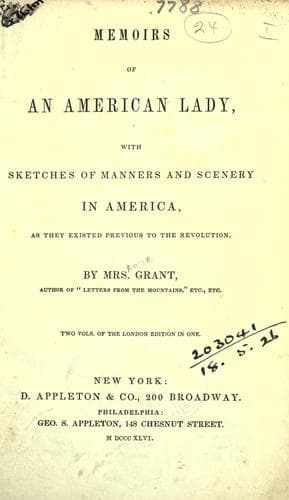
Memoirs of an American Lady: With Sketches of Manners and Scenery in America, as They Existed Previous to the RevolutionGrant, Anne MacVicar
History
Memoirs of an American Lady: With Sketches of Manners and Scenery in America, as They Existed Previous to the Revolution
Grant, Anne MacVicar
Indians of North America; New York (State) -- Social life and customs -- To 1775; Schuyler, Catalina, 1701-1778 or 1779
of their followers in a manner far more gratifying to them than any
enjoyment to be derived from temporal power. That this desire should
unconsciously gain ground in a virtuous and ardent mind, is not
wonderful, when one considers how the best propensities of the human
heart are flattered, by supposing that we only sway the minds of others,
to incline them to the paths of peace and happiness, and derive no other
advantage from this tacit sovereignty, but that of seeing those objects
of affectionate solicitude grow wiser and better.
To return to the apostolic and much beloved Freylinghausen. The progress
which this regiment made in the good graces of his flock, and the
gradual assimilation to English manners of a very inferior standard,
alarmed and grieved the good man not a little; and the intelligence he
received from some of the elders of his church, who had the honour of
lodging the more dissipated subalterns, did not administer much comfort
to him. By this time the Anglomania was beginning to spread. A sect
arose among the young people, who seemed resolved to assume a lighter
style of dress and manners, and to borrow their taste, in those
respects, from their new friends. This bade fair soon to undo all the
good pastor’s labours. The evil was daily growing—and what, alas! could
Domine Freylinghausen do but preach! This he did earnestly and even
angrily, but in vain. Many were exasperated, but none reclaimed. The
good domine, however, had those who shared his sorrows and resentments;
the elder and wiser heads of families, and, indeed, a great majority of
the primitive inhabitants, were steadfast against innovation. The
colonel of the regiment, who was a man of fashion and family, and
possessed talents for both good and evil purposes, was young and gay;
and being lodged in the house of a very wealthy citizen, who had before,
in some degree, affected the newer modes of living, so captivated him
with his good breeding and affability, that he was ready to humour any
scheme of diversion which the colonel and his associates proposed. Under
the auspices of this gallant commander, balls began to be concerted, and
a degree of flutter and frivolity to take place, which was as far from
elegance as it was from the honest, artless cheerfulness of the meetings
usual among them. The good domine more and more alarmed, not content
with preaching, now began to prophecy; but like Cassandra, or, to speak
as justly, though less poetically, like his whole fraternity, was doomed
always to deliver true predictions to those who never heeded them.
-------
CHAP. XXXV.
Plays acted—Displeasure of the Domine.
Public-domain text, read in full here on John Shaqi.
Reviews
Reviews
No reviews yet
Be the first to share your thoughts on this work.
Elsewhere in the archive
Join the Discussion
Join the discussion
Sign in to leave a comment or review.
Sign InorCreate an account